For most of my life, I thought Carnival was a big parade that occurred in Rio each year. It was only in the past year that I learnt that some other cities and towns across South America celebrated Carnival, such as Gualeguaychu in Argentina, Oruro in Bolivia and Barranquilla in Colombia.
Carnival is actually celebrated all over South America, and after missing out twice in Argentina due to rain, our fears that we had missed our chance to witness this famous South American event were completely unfounded.
Our chance finally came in the Bolivian city of Sucre. While called Carnival all over South America, the actual celebration varies significantly by region. The famous Carnival sites such as Rio, Gualeguaychu or Oruro have big organised parades that you pay money to watch from a grandstand.
Sucre was completely different. It had none of the glamour or structure of the more famous Carnival sites. There were numerous marching bands scattered throughout the city, and each one would march through the streets playing songs while groups of people walked in front drinking and dancing. But mainly drinking.
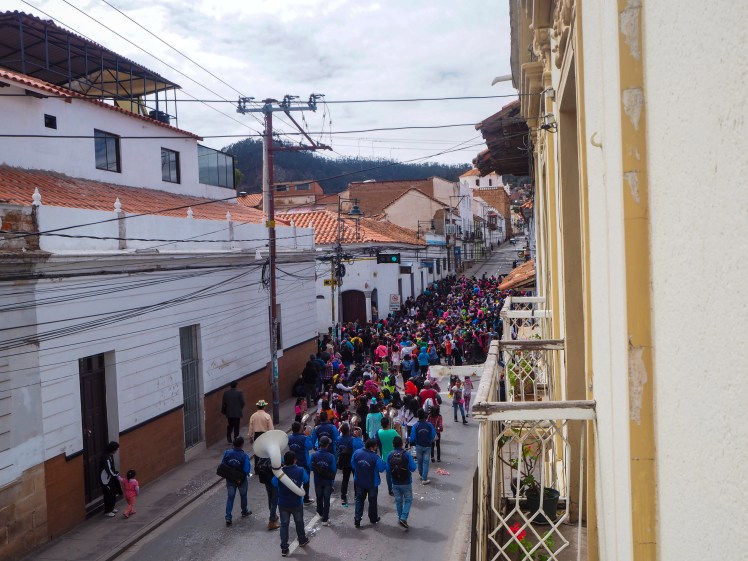
Carnival in Sucre also involves water bombs (despite them being made illegal this year due to significant water shortages in Bolivia – including La Paz going without water for almost a week) and lots of foam spray. Anyone is fair game, and I guess at the very least throwing water bombs and spraying foam on people gives the kids something to do while the adults get blind drunk.
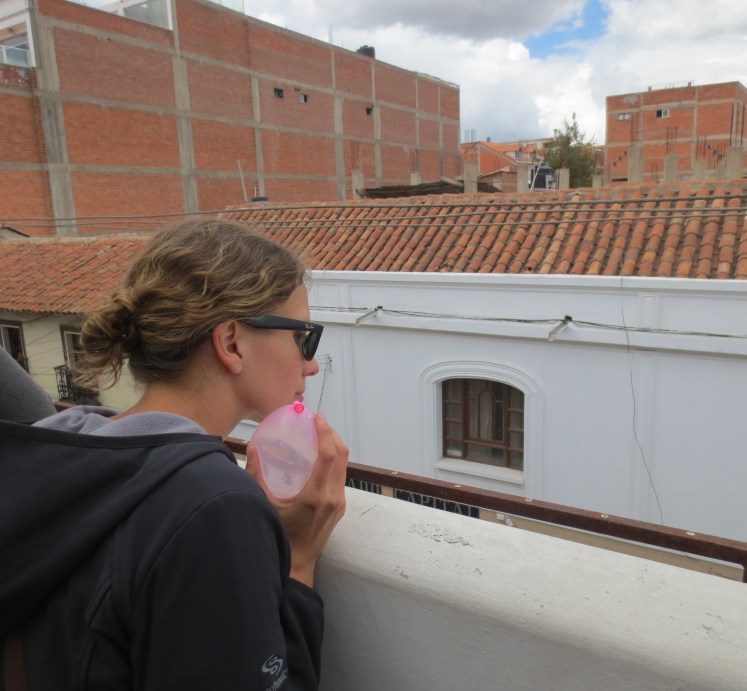
Some of the Carnival days in Sucre were themed, such as our second day which was ladies day and felt like one giant hens party – even to the point of having seedy men lurking around in the hope of getting lucky. But theme or no theme, each day remains broadly similar: Tigre de leche (the alcoholic drink of choice), water bombs, foam and a marching band.
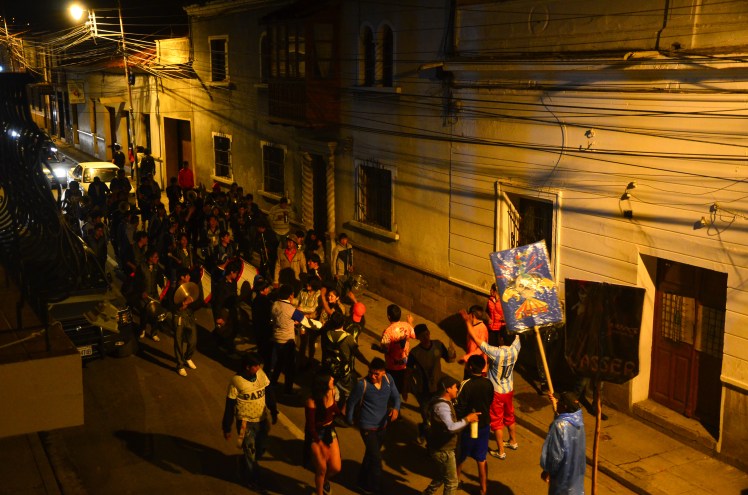
For the first two days, watching the marching bands go past our room and throwing water bombs at people in the street was a lot of fun. However, the first two days were only the beginning, and when after five days we were still getting pelted by water bombs as we tried to go to the supermarket to get some food, the novelty had well and truly worn off.
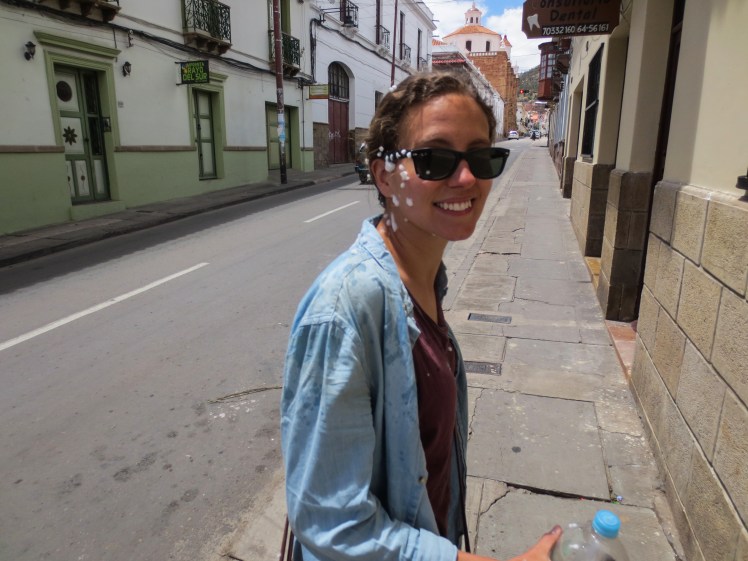
It wasn’t just the foam and water bombs that got to us. The marching bands play the same few songs over and over again. Every night the streets smelt of urine and were full of people who were absolutely wasted. Like a mouse caught in a trap, we’d enjoyed that first nibble of cheese but now we couldn’t escape.
Even worse, the entire city shut down over the Carnival period. Our reason for being in Sucre was to take some Spanish lessons before we met Claire in La Paz, and the language school was shut for three straight days. I got fairly sick and for a time it appeared all the medical practices were closed – luckily we were able to find the only one that was open. We even had problems trying to leave, buses to La Paz weren’t running on our preferred departure date as it was the final day of Carnival celebrations.
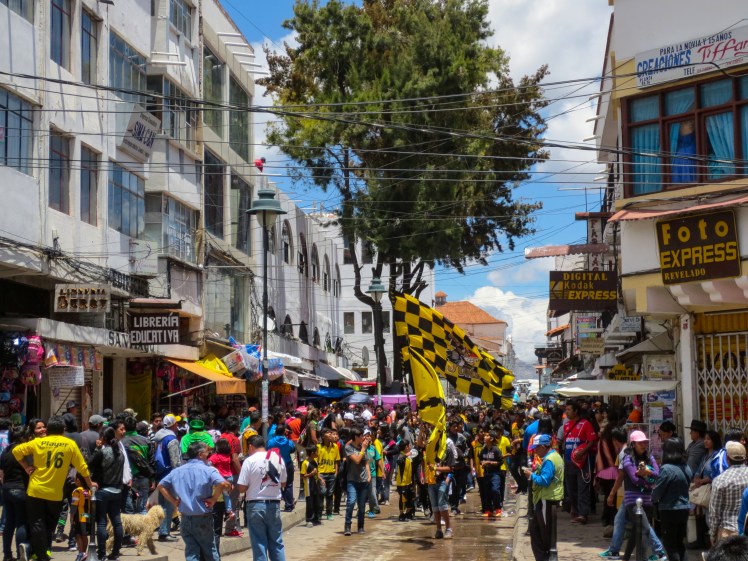
Aside from trying to avoid getting water bombed, we did manage to fit in three Spanish lessons during our week in Sucre, and it was also good to stay in the same place for a while and just relax, after the last two weeks in Argentina being fairly rushed.
The other city we visited in the period between entering Bolivia and meeting Claire was Potosi. At 4,090m above sea level, Potosi is one of the highest cities in the world. It is also a perfect illustration of how negative colonialism can be on a country, and provides great insight into how Bolivia – a country blessed with abundant natural resources – remains the poorest in South America.
The city of Potosi was founded in the 16th century after huge amounts of silver were discovered in a nearby hill. Native Americans were forced to work long hours in incredibly unsafe conditions to extract this silver, which funded the Spanish Empire’s wars with the British, French and Dutch. At its peak, only 28 years after the town was established, it was as big as London and bigger than Madrid, Rome or Paris. Estimates of the amount of people that died in these under three centuries of colonial rule are as high as eight million.
Despite being built around an enormous silver deposit, Potosi nowadays is one of the poorest cities in the poorest country in South America. Unbelievably, locals still continue to mine in the area. Zinc and tin have replaced the almost completely exhausted silver deposits as the minerals of choice, and the life expectancy of the miners remains incredibly low, with miners having to deal with hazards such as silicosis, asbestos and collapsed mines.

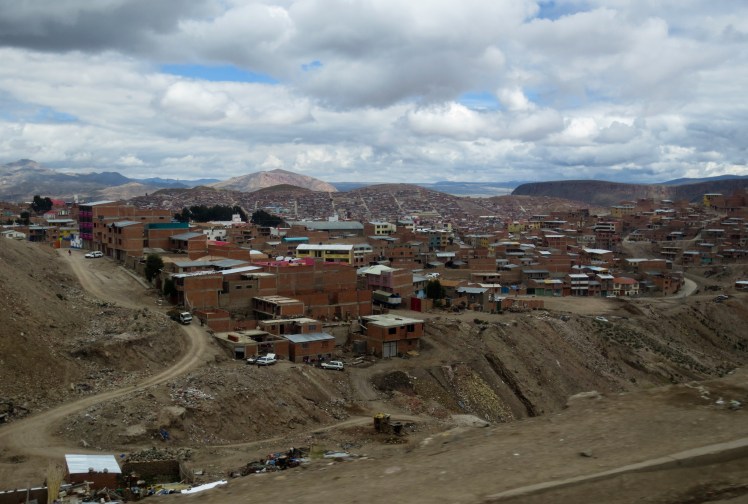
According to the International Monetary Fund, Argentina, Chile and Uruguay (the three countries we had visited before Bolivia) all sit between 50th and 60th in Gross Domestic Product (GDP) per capita. Bolivia is 119th. There is somewhat of a trade-off when travelling through a poorer country. Undrinkable tap water and dirty and run down facilities make travel a lot more uncomfortable and a lot more likely that you’ll get sick. But on the other hand, these countries allow you to do activities for a fraction of the cost elsewhere, enable you to see completely different cultures and gain greater insight into the conditions a lot of people throughout the world have to live in.
For the first week in Bolivia, I struggled with the negative aspects of travelling through a less developed country – getting sick clearly didn’t help. However, it didn’t take too long to settle in and start to enjoy the many positive things that Bolivia has to offer.
Andrew
 dred
dred 