Even though we weren’t going to be in Sucre until over three months into the trip, we decided before we left Australia that it would be a good place to do Spanish lessons. Along with Valparaiso, Sucre was a town that I really liked last trip and definitely wanted to come back to. The classes were also going to be half the price of schools in Chile and Argentina, making the decision even easier.
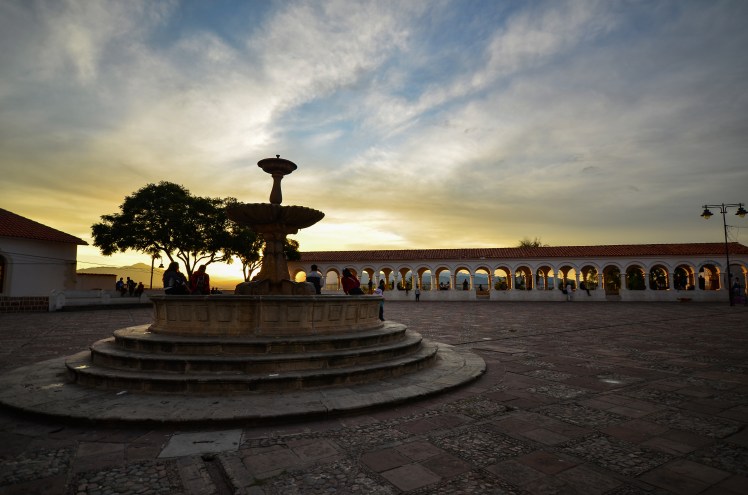
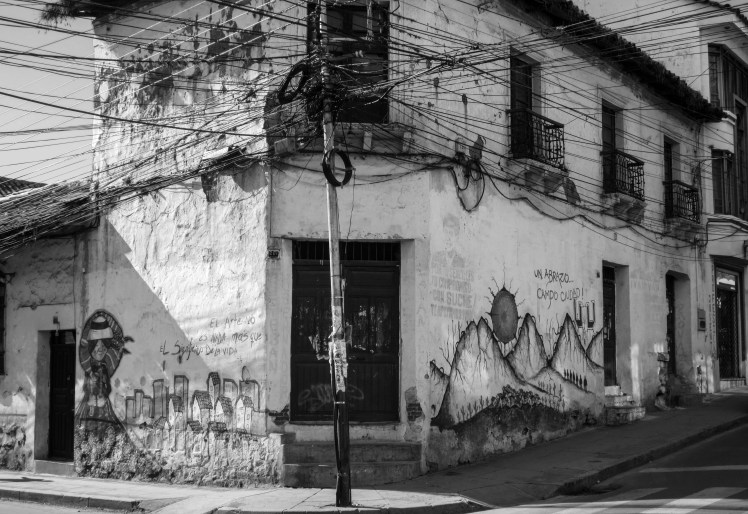
Sucre is called ‘the White City’, a reference to the numerous white colonial era buildings in the centre. Owners are required to apply a fresh coat of paint each year, and this certainly keeps the town centre looking well maintained. These buildings distinguish Sucre from other Bolivian cities and are a major factor in its attractiveness. However, I can’t help but feel guilty in thinking this as they are remnants of colonialism and were funded by the copious amounts of silver that the Spaniards plundered from nearby Potosi. I suppose at least the conquistadors used some of the riches of Cerro Rico to construct something in the country that they took so much from.
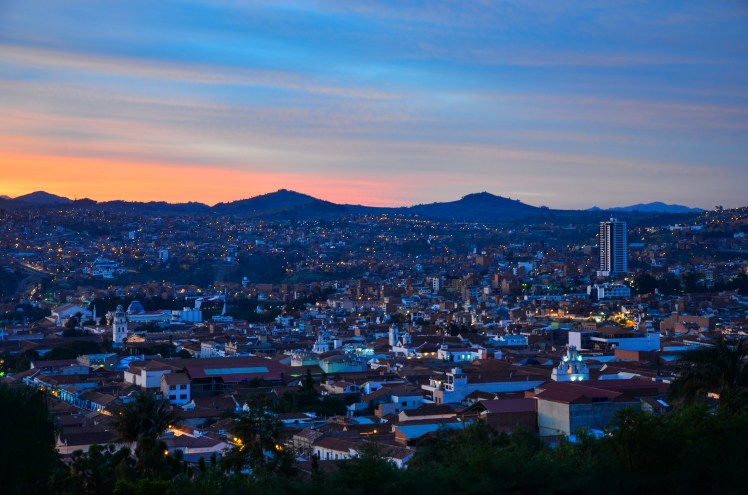
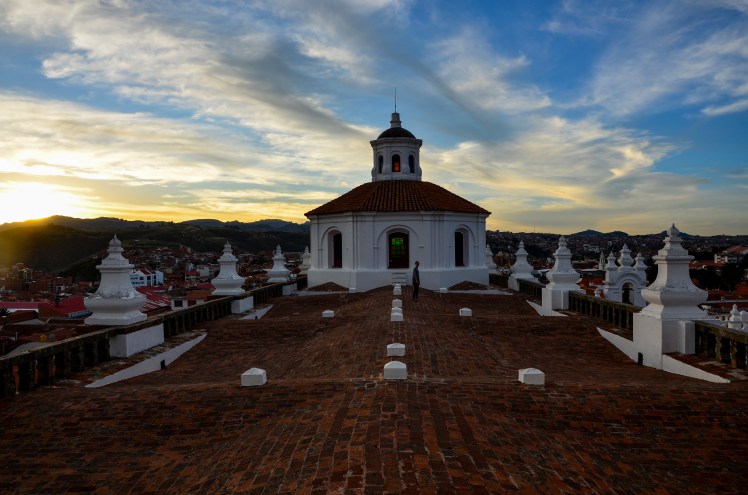
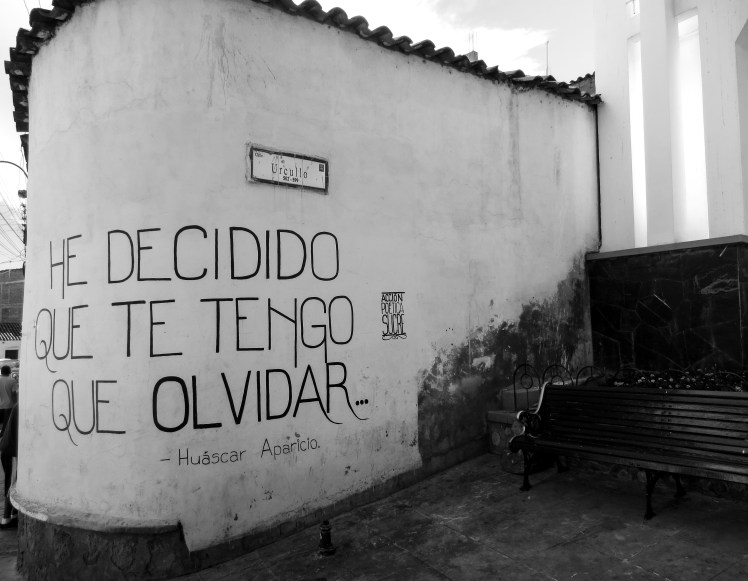
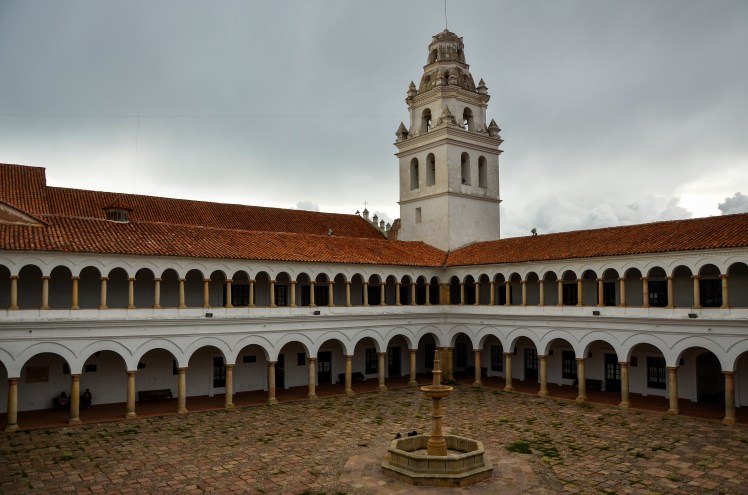
There isn’t really one thing that can explain why Sucre makes a great base. When asked, locals always describe it as ‘muy tranquilo’ (very calm) and that the weather is much better than the extremes of Potosi (cold high altitude) or Santa Cruz (humid lowland). Both of these reasons are true in Bolivian terms, but compared to Australia the city seems unnecessarily hectic for the population size, and the summer climate is just as changeable as Melbourne. I find Bolivian and Andean Indigenous history fascinating and I think for me, being able to live in a relatively less chaotic and cheaper city (compared to say, La Paz) whilst still experiencing the culture is a big part of Sucre’s appeal.
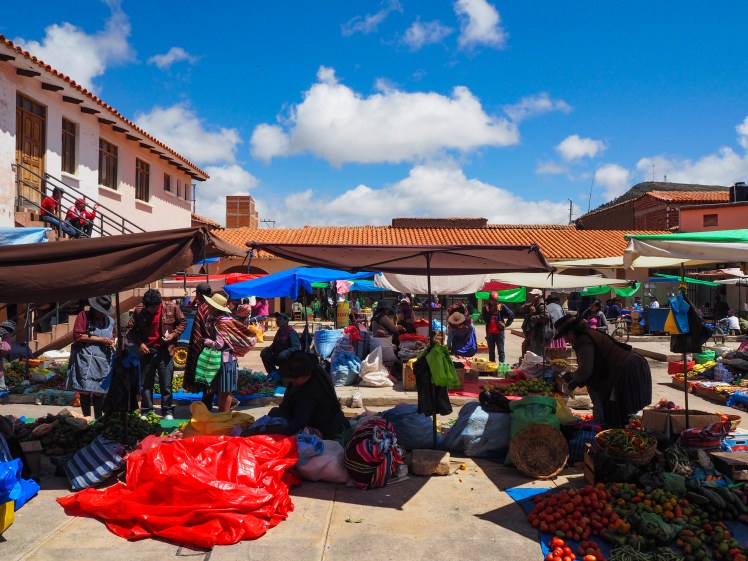
Nearby Tarabuco holds a weekly market on Sundays, which attracts both tourists and locals alike. I really enjoyed taking a collectivo (mini-bus) for the 2hr journey to and from the village instead of a more expensive tourist bus, as it was a glimpse into Sunday morning life for many Sucre locals.
An excellent museum in Sucre displays incredible traditional weavings from indigenous groups of Tarabuco as well as those of the Jalq’a and Tinkipaya groups. There were many beautiful pieces available at the gift shop, of which the majority of proceeds go to the artist and the remainder is used to sustain the museum and its research. I really wanted to buy something to support the local community but unfortunately there wasn’t much that fit the budget of a couple of backpackers.
Sucre is also home to a large collection of dinosaur footprints, which were uncovered by a concrete company in 1985. While a decent museum has been built at the site, the concrete company still operates in the area so it was a little strange to have noisy trucks driving past as we gazed up at the enormous wall of footprints. Apparently the tracks were made next to a body of water and were preserved by a covering of earth as the landscape changed rapidly. They appear vertically due to the rise of the Andes.
A typical day in Sucre for us consisted of four hours of lessons in the morning, followed by a lunch break and then homework for a few hours in the afternoon. Although four hours doesn’t sound like much, we were always mentally drained by the end of class due to the amount of concentration required for the entire lesson. We had four different teachers in our time at the school and they either didn’t speak any English, or avoided using it unless absolutely necessary. This was initially intimidating but really helped with the immersion. We went to the central market most days to buy supplies for meals and developed a good rapport with one of the ‘caseras’, which sounds like a very minor detail but it made me feel less of a tourist and I enjoyed the routine.
Andrew turned 30 whilst we were in Sucre, and we celebrated by going to his favourite Mexican restaurant and eating way too much food. Luckily there are elaborate and delicious cakes sold on nearly every block, so it was easy to find a good one. I didn’t manage to find a birthday card anywhere though!


For the last two weeks in the city, we stayed with a local family. The home stay was organised through the language school and was a great way to practise what we were learning each day in the lessons. Lunch is the most important meal of the day in Bolivia, and in Sucre most people go home for a couple of hours to be with family before returning to work or study. Our hosts, Brenda and Manuel, cooked us some delicious meals and it was great to try a few traditional Bolivian dishes.


I was quite flat when our time in Sucre came to an end. It had become our little home and we had gotten to know the city quite well over nearly a month. Over the course of the trip I have come to realise that I prefer a slower pace of travel these days. Sucre was closer to living than travel and this was very much welcomed after nearly four months on the road.
Erin
 dred
dred 