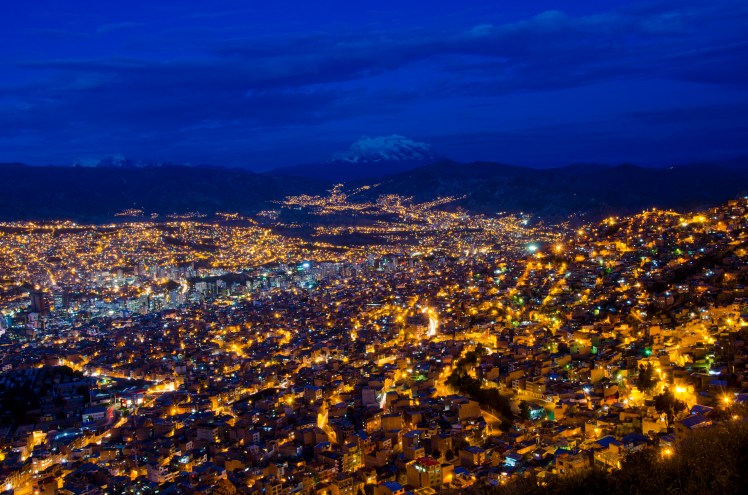
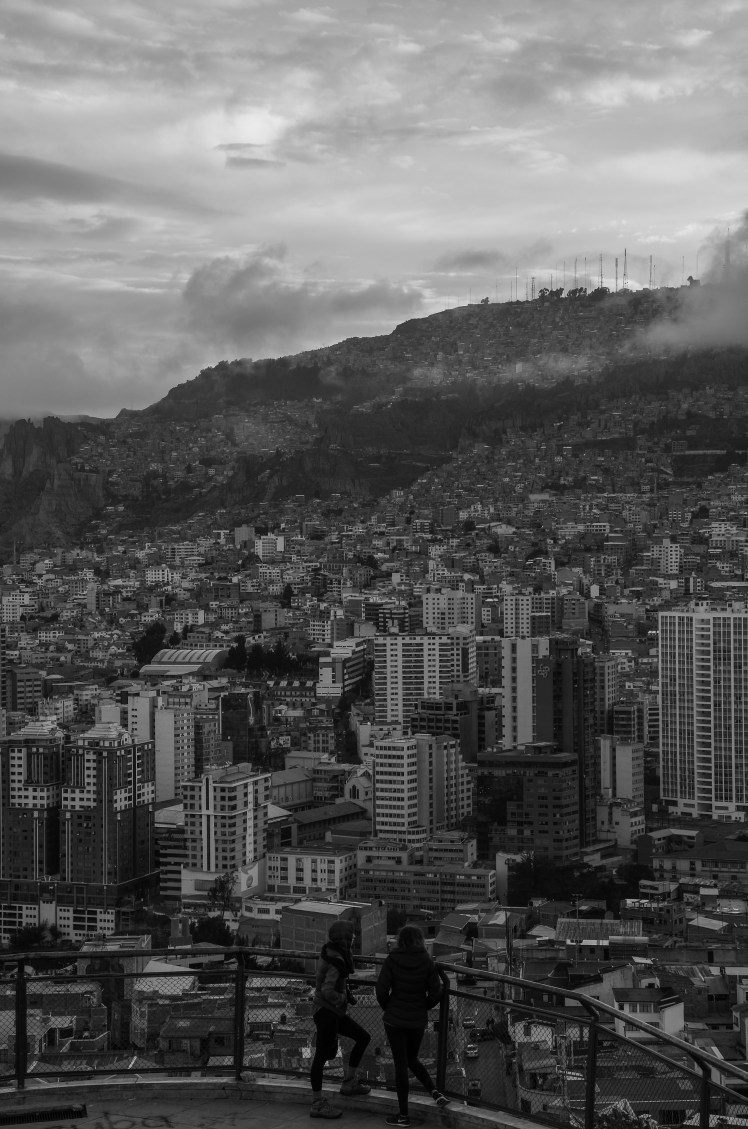
After spending time in Sucre I wasn’t looking forward to returning to a big city, but as our bus descended the main road into La Paz, the striking layout drew me in. The centre lies at the bottom of a steep valley and sprawls up the slopes, which rise 450m to the plateau of El Alto, La Paz’s poorer neighbour to the west. The eastern border is marked by the stunning Cordillera Real, a mountain range that includes multiple 6000m+ peaks and extends northwards to Lake Titicaca. The most imposing is Illimani, which towers over the city to the south east.
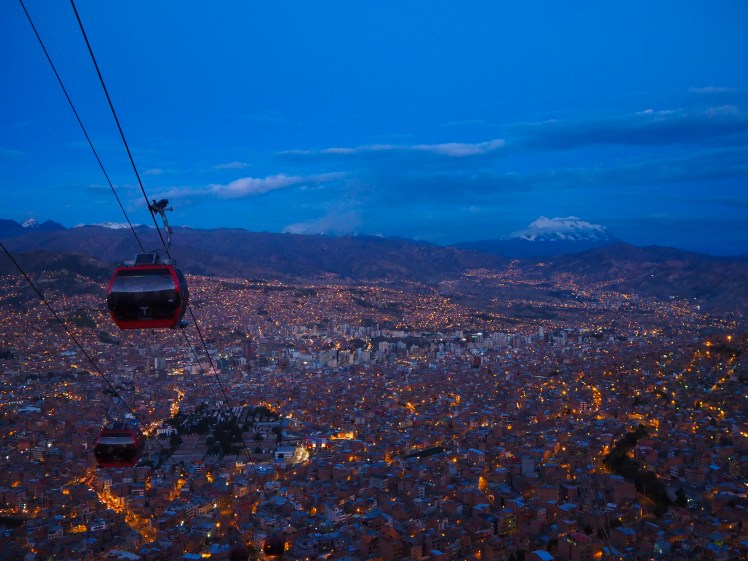
Previously, this geography and the complicated road network meant that El Alto’s residents were fairly isolated from La Paz’s central business district and other facilities. However, this began to change three years ago with the construction of the cable car network which links the twin cities. Three lines were open when we first arrived and a fourth opened whilst we were there. The project is an initiative of president Evo Morales, who has been in power since 2006 as the head of the ‘Movimiento al Socialismo’ party and is the country’s first indigenous leader.
Morales was born into a farming family and later became coca plant farmer himself. He was a heavily active union member and as president has sought to improve conditions for indigenous Bolivians, expand the production of coca, and nationalise the gas industry to reduce the presence of foreign companies who had been taking advantage of Bolivia’s natural resources. He has fiercely defended the growth of the coca plant as part of traditional Andean culture and this has reportedly resulted in less coca being funnelled into cocaine production (although this is disputed).
Exploring on foot, bus and cable car, our eyes were opened to recent Bolivian political tension. In February 2016, Morales held a referendum that proposed changing the constitution to allow him to run again in the next election in 2019. He has already been elected for two consecutive terms (plus a third that doesn’t count towards the limit because it was before the re-branding of Bolivia to a ‘Plurinational State’), which is the maximum allowed in Bolivia. This proposal was defeated 51% to 49%. As seems to the South American way, the politics in Bolivia are fiery and divisive. We saw ‘Si’ and ‘No’ graffiti everywhere we travelled, with support for the president more evident in rural areas and more opposition in the city centres. I was surprised to see how often ‘No’ was scribbled around Coroico, a town in the coca growing area of the Yungas. Apparently even the coca farmers are divided when it comes to Evo. Some from the traditional growing areas believe that his recent policies that increased the area of land allowed to grow coca will result in more of the product being sold to the drug industry.
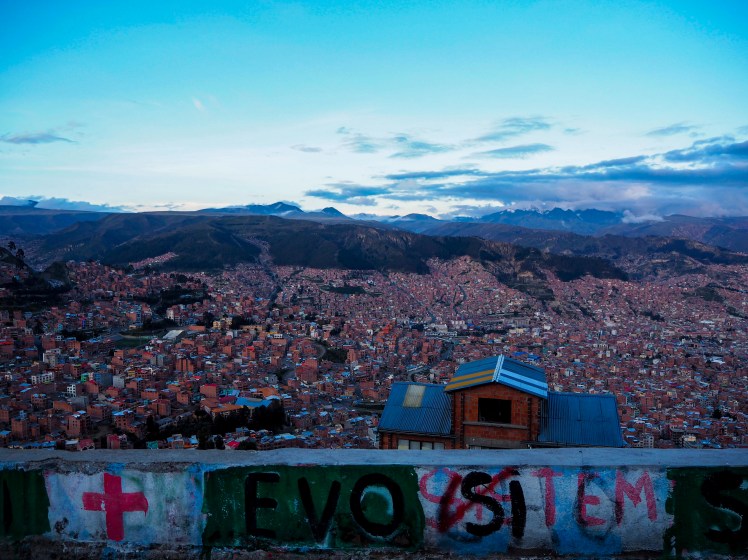
Another statement scrawled across buildings and roadsides was ‘#21FDiaDeLaMentira’ (Day of the Lie), a campaign created by Morales supporters who claimed that the result of the 21st February 2016 referendum was influenced by erroneous reporting and the spread of misinformation by the right-wing opposition. The issue is ongoing and the government are said to be investigating legal pathways to allow Morales to run again in 2019.
What isn’t up for debate is the fact that Morales’ infrastructure projects have made it easier for tourists to get around. On our trip three years ago, the road between La Paz and Uyuni was a pothole-riddled gravel nightmare. It has since been paved, making the trip far more comfortable and likely safer. The cable car network is an excellent way of seeing both La Paz and El Alto, and at 60 Australian cents a ride is incredibly cheap. Whether this ease of transport will translate into improved tourism numbers and revenue, I am not sure.
Despite popular belief, La Paz is not technically the capital of Bolivia. In the constitution that title goes to Sucre, however the White City holds just one of the three facets of government, the judicial branch. The other two (executive and legislative) reside in La Paz. We certainly witnessed more protests in La Paz than in Sucre. We happened to be in La Paz on the 23rd March, which is the anniversary of the loss of their coastline to Chile in the much disputed War of the Pacific in 1879. High school students marched through the streets towards the main square carrying models of boats and signs demanding ‘Mar para Bolivia!’ (Sea for Bolivia). The case is currently being disputed in the Hague.

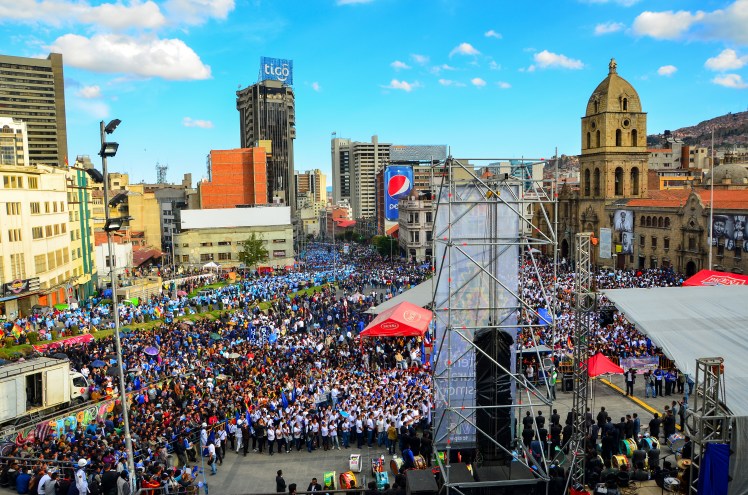
La Paz also loves a fiesta. We saw fiestas with the associated markets for Carnival, Semana Santa, something to do with ceramics, and my personal favourite, the Fiesta de Odontologia (dental party). It actually seemed like a pretty decent public health initiative, with multiple mobile dentist rooms in vans parked in the main square offering consultations. We didn’t take up the opportunity for a check-up and instead walked through the displays chomping down the chocolate doughnuts we’d just bought from the market.
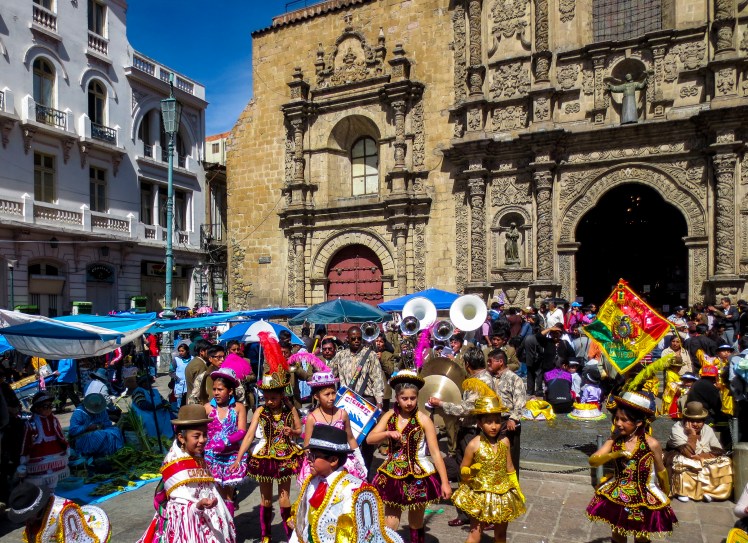
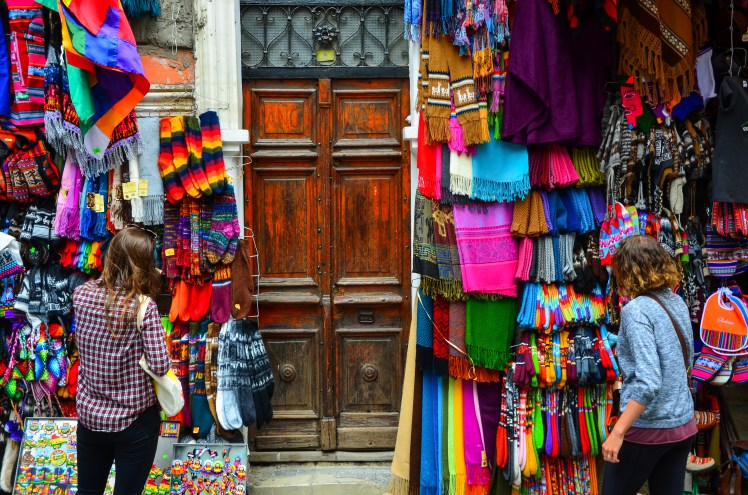
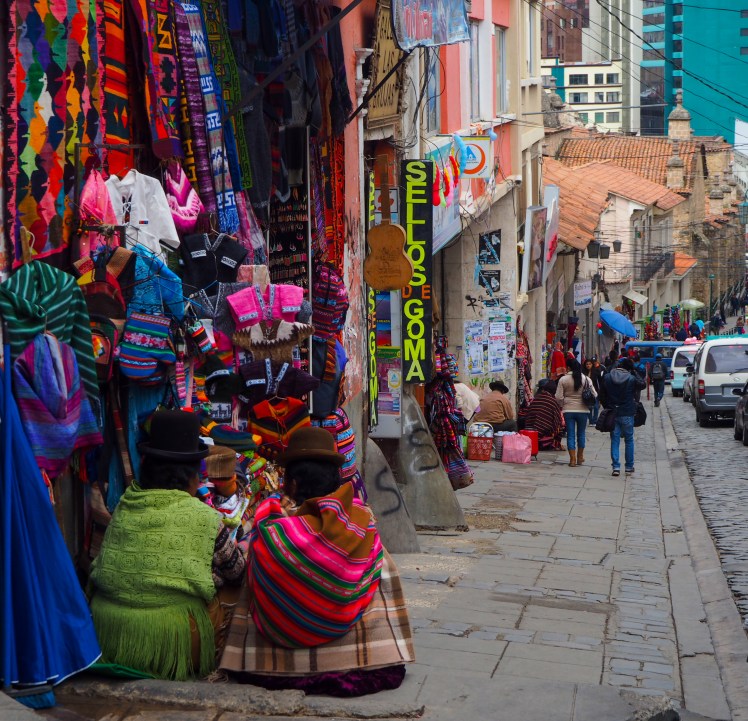
As we travelled in and out of La Paz a few times over the period of two months, I continued to learn more and was never bored. I think a lot of its intrigue and atmosphere stem from the fact that it is the first major South American city that we have visited on this trip that does not have a dominant colonial presence or European feel. Street markets are the main form of shopping and supermarkets are hard to come by. It is a hectic, bustling, passionate and sometimes overwhelming place but I highly recommend spending at least a few days here if you ever find yourself in the enchanting country that is Bolivia.
Erin
 dred
dred 