Despite there being a lot of annoying tour operators in Cusco’s Plaza de Armas, one of them actually came in handy when organising the Salkantay trek. We were planning on doing the trek independently, but doing the sums we realised it wasn’t going to be much cheaper than booking with a guided group, which is how most people do it. The minimal difference in cost plus the added bonuses of not having to cook, set up a tent or carry all of our stuff made the decision for us. The van picked us up about 5:30am and after a breakfast stop along the way, we arrived at Challacancha, the starting point of the walk.
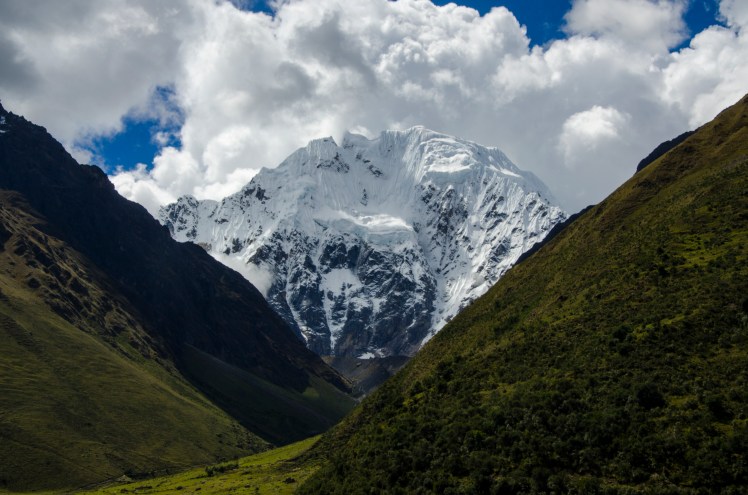
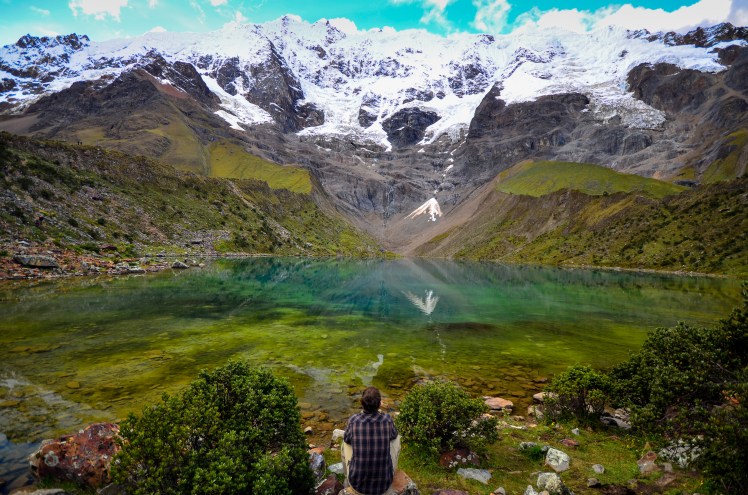
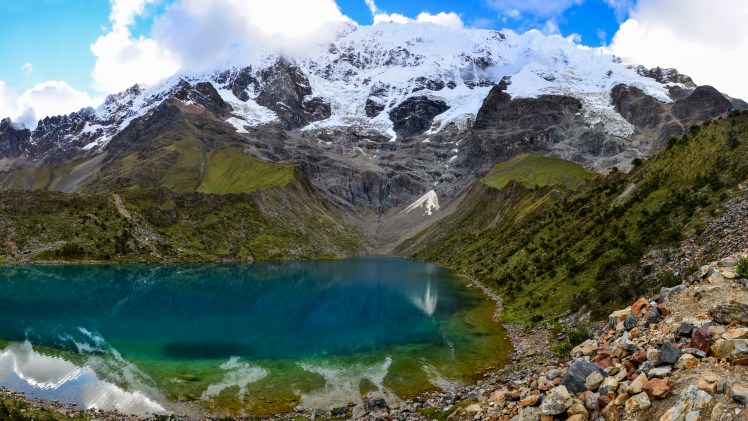
Apart from 30min of uphill at the start, the walk to the campsite at Soraypampa was flat. The sun was shining and Mt Humantay made an excellent backdrop to the walk. As we approached the campsite, Mt Salkantay came into view. It was such a picturesque camping spot. After a massive lunch, we walked up the hill to Laguna Humantay at the base of the mountain. The water and the wall of mountain behind it were stunning. I found a nice little rock to sit on and take it all in. That night was pretty chilly as the campsite was at 3,920m.
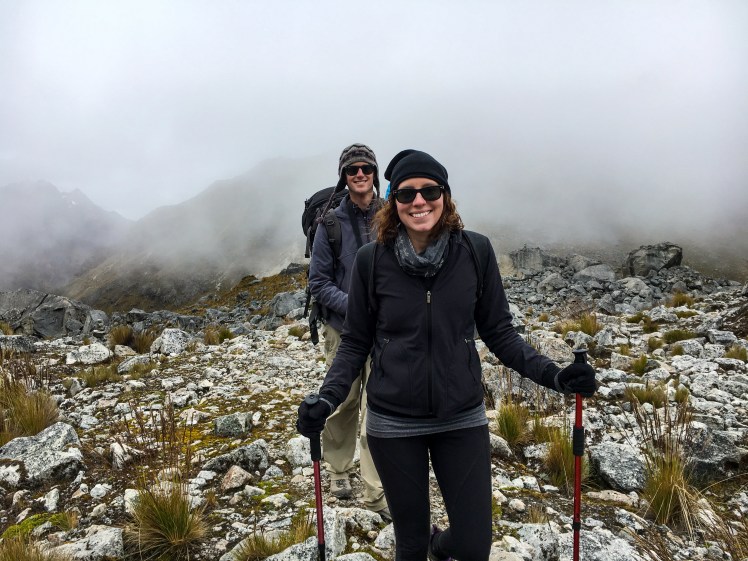
Day two involved walking up to the Salkantay pass (4,630m) and then descending to Chaullay (2,900m), where we camped. Everyone in our group was apprehensive about the pass, and it definitely wasn’t easy, but with regular breaks and a slow and steady pace we made it to the top without too many difficulties. Clouds crept in but we were lucky enough to get a glimpse of Laguna Salkantay.
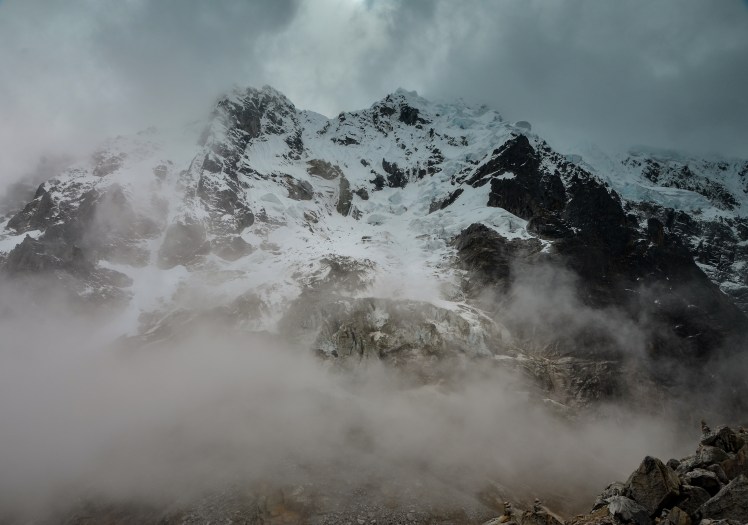
The walk from the pass to Chaullay was similar to the first day of the Choro trek in Bolivia, and once again I enjoyed seeing the landscape transition from alpine to rainforest with the decreasing elevation.
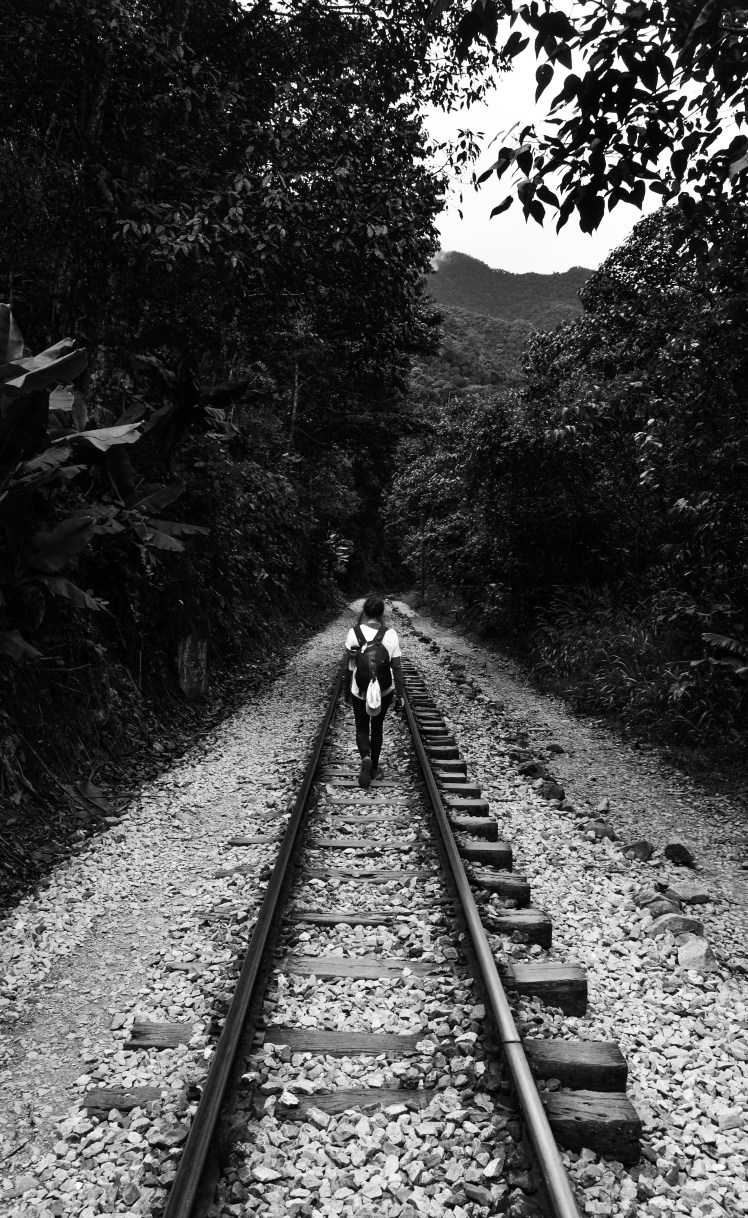
The scenery on day three wasn’t as varied and we walked a lot of the day on the road, arriving at our camping spot in Santa Teresa mid-afternoon. We visited the nearby hot springs which felt like a very luxurious thing to be doing in the middle of a trek! The first half of day four was not that interesting, as we continued walking along the road to Hidroelectrica. After lunch, the walk along the train tracks to Aguas Calientes was a lot more enjoyable, and we could see glimpses of Machu Picchu high up on the ridge above us. We stayed in a hostel and found it strange to be enjoying the comforts of showers and wifi while we still had more hiking in coming days.
Our alarms sounded bright and early on day five and we left the hostel with the group at 4am. Our guide had advised us to get to the gate at the base of the climb to Machu Picchu as early as possible. It opened at 5 and after a 45min stair climb we made it to the entrance. Our first sight of the ruins was very different to the one we had three years ago after hiking the Inca Trail. This time it was perfectly clear and the snow-capped Pumasillo mountain was visible in the distance. As the sun rose, the stone buildings were slowly illuminated and the Urubamba river could be seen in the valley below.
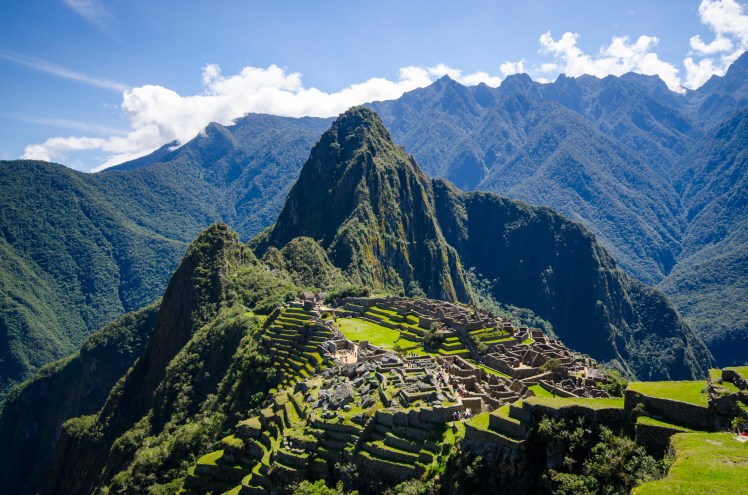
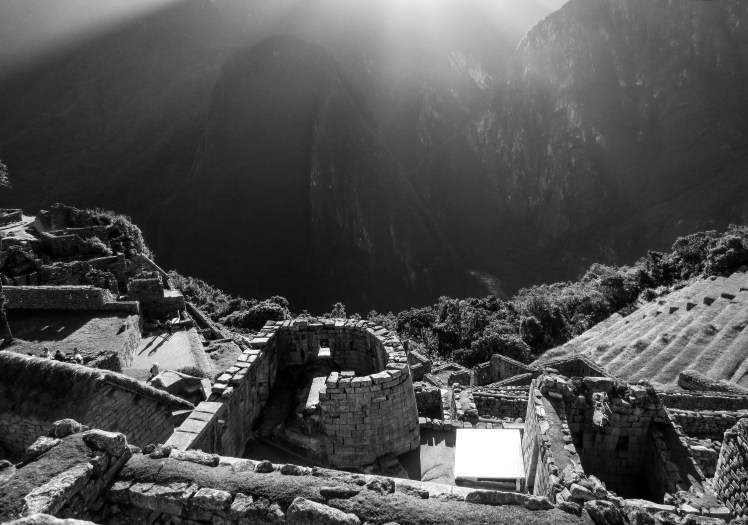
We had a 2 hour tour from our guide and then spent a few more hours exploring the main site and walking to the Sun Gate and the Inca bridge. The amount of tourists increased throughout the morning as people arrived by the bus load. It was almost impossible to get a photo without someone walking into it, which certainly takes away from the serenity of the ruins.
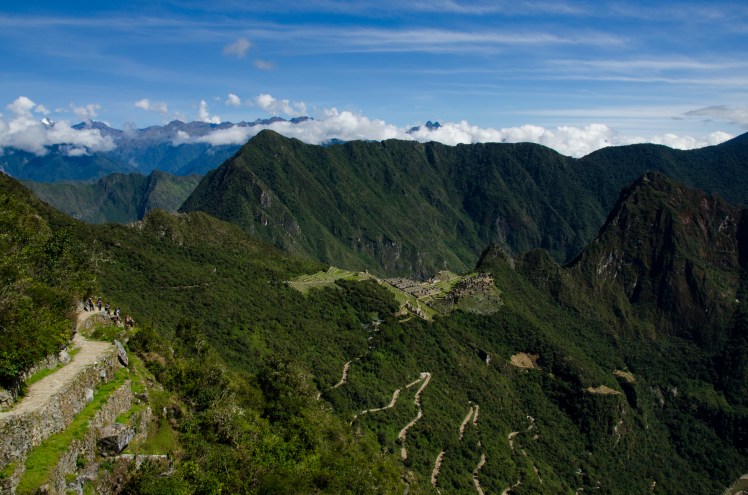
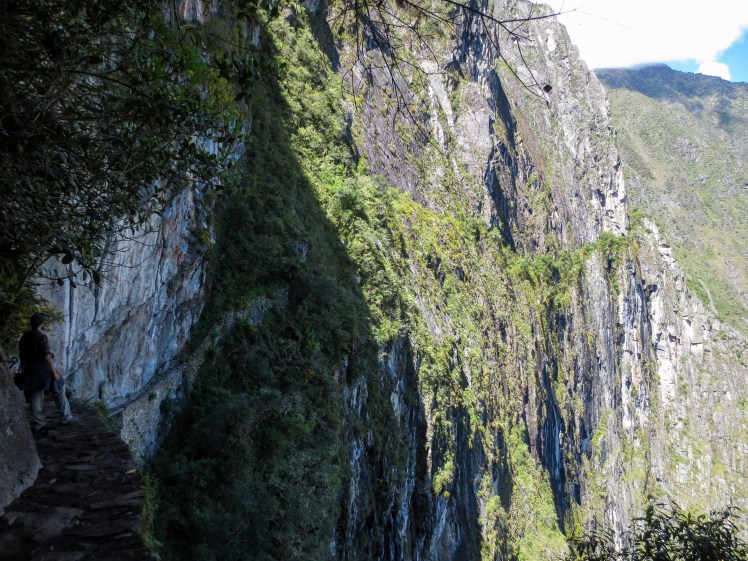
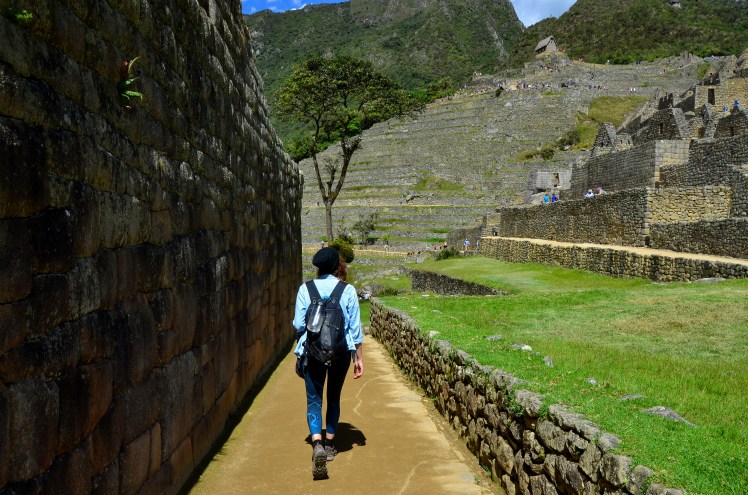
A few people have asked us if we preferred the Salkantay or the Inca Trail. The first two days of the Salkantay are stunning, whilst the Inca Trail passes other ruins and enters Machu Picchu more dramatically through the Sun Gate. There is an option to combine the two treks by starting the Salkantay and branching off to join the Inca Trail just before the pass, which I think would be the perfect mix.
After Machu Picchu, we stayed another night in Aguas Calientes (2 nights were more than enough in this cute but soulless tourist town) and walked back to Hidroelectrica the following day. The bus from there to Ollantaytambo in the Sacred Valley was a 4hr trip on a narrow road that was at times carved into the side of a steep mountain. An impressive Incan fortress overlooks the pretty Ollantaytambo village, and this was the site of the only victory the Incans had against the Spanish.
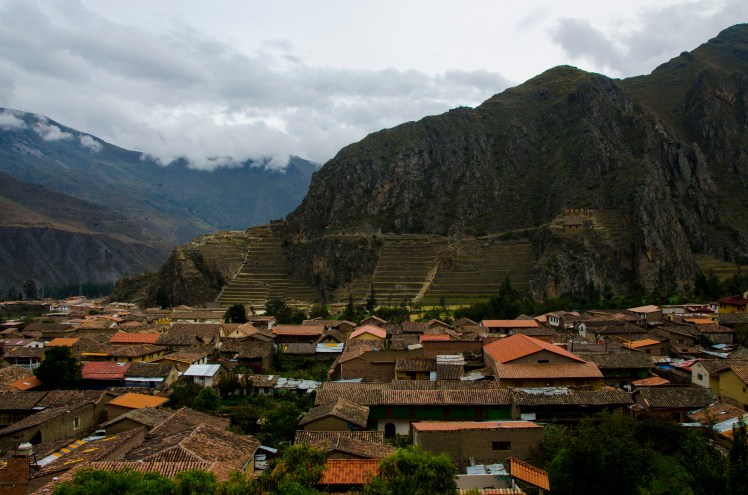
Avoiding pricey tours, we took a local collectivo and a shared taxi to see two other Incan sites in the area – Moray (believed to be used for agriculture experiments) and Salinas (terraces cut into the hill side to extract salt from the water). We stayed in nearby Pisac and spent the next day exploring the ruins up on the hill and browsing the giant market in the main square.
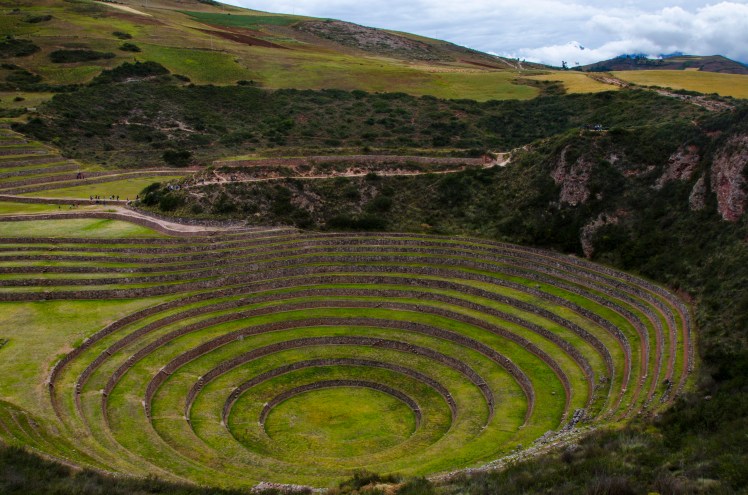
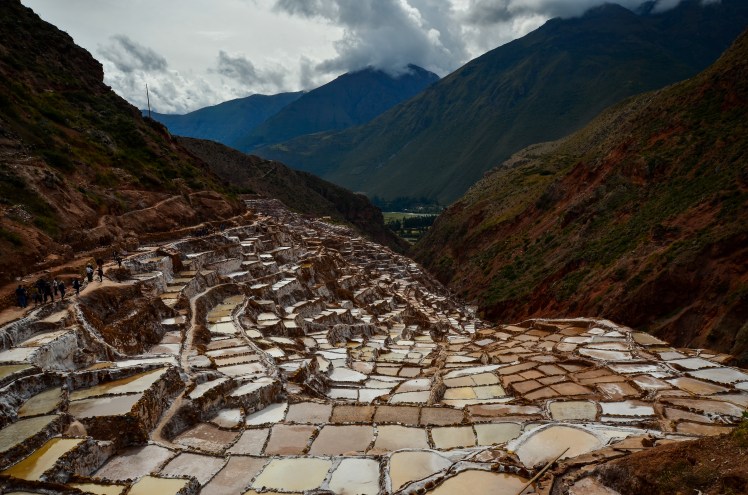
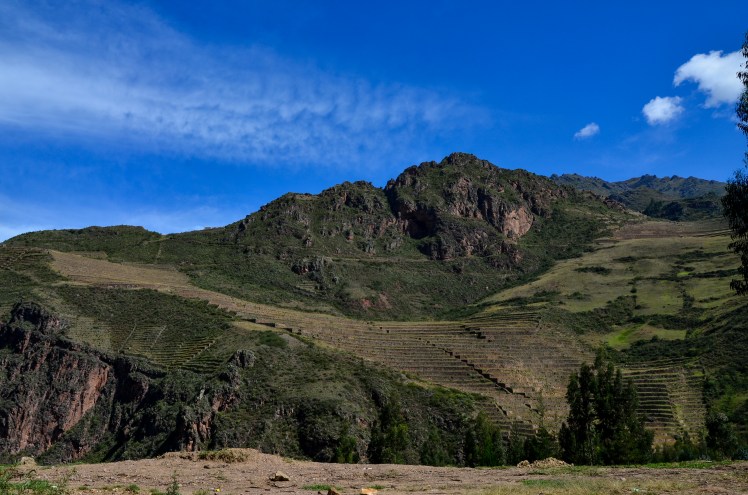
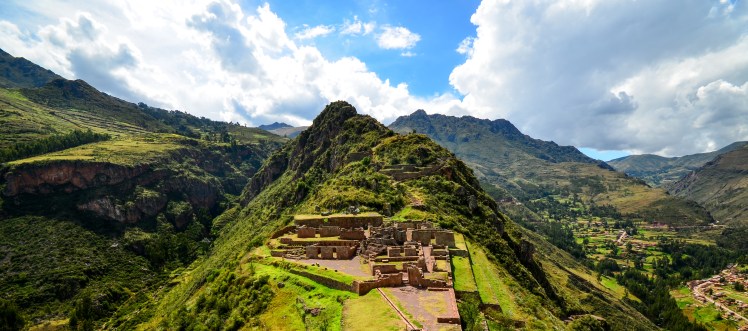
Returning to Cusco a week after we had left for the Salkantay trek, I felt we had learnt a lot more about Incan beliefs, architecture and their clashes with the conquistadors. We had visited the Incan museum in Cusco, but it was not until we stood in front of their incredibly well-constructed buildings situated in the most unlikely and seemingly inaccessible places that we realised just how impressive both the structures and their empire was.
Erin
 dred
dred 
These photos are amazing guys! Makes me want to go back to Peru. Liv xx
LikeLike
Thanks Liv! Peru has got it all
LikeLike
Amazing experience for the Machu Picchu. The Trek Salkantay is a journey of a lifetime. Actually the are different routes to get to Machu Picchu, for example: Salkantay Trek, Lares, Cachiccata, Choquequirao, Inca Jungle and the trip to Machu Picchu by bus via Hydroelectric. For the trek Salkantay I would like to recommend walking sticks and mosquito repellent, rain poncho. However anytime you are going to salkantay make sure to have rain clothes with you.
LikeLike