Tourists come to Iquitos for two reasons. Ayahuasca (a hallucinogenic plant taken by many to find themselves) and the Amazon basin. It can be a fun game to play before you start talking to another tourist, Ayahuasca or Amazon? The fifty year old couple with their DSLRs around their neck and the 55kg males with 35 ankle bracelets made particularly easy guesses.
Iquitos is also the largest city in the world inaccessible by car and exploiting resources has been a constant theme throughout its history. It was a rubber boom of the early 19th century that put the town on the map, and major industries today include petrol, timber, fishing and hunting. And tourism.
Indeed, a slight bit of research into tourism in Iquitos leads you down a rabbit hole of fake guides, “jungle” lodges that aren’t much past the outskirts of a major (500,000 people) city and poor treatment of animals. Many guides have no issues taking sloths out of trees, and animal centres cage rare creatures in horrible conditions, all in the hope that a few gringos will pay a bit of money to get a good photo (#amazingwildlifeexperience).
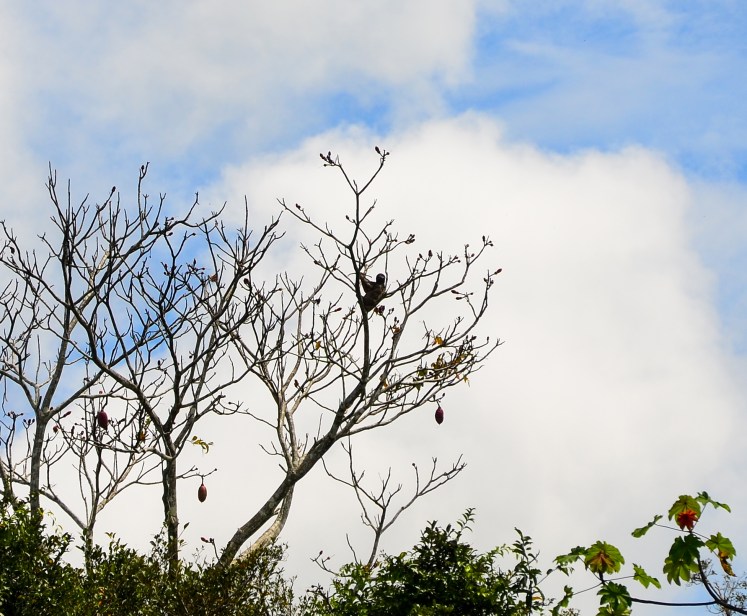
During our research we stumbled across an Amazon lodge that was very passionate about conservation of the Amazon ecosystem. The owner, Katoo, worked incredibly hard in ensuring his plot of land was as pristine a jungle as possible, and this meant spending countless hours fighting the hunters and loggers that frequently trespassed onto his property. The other attraction of this lodge was that it was located very deep in the jungle, with the understandable catch that the tours were significantly more expensive. We decided to spend the money.
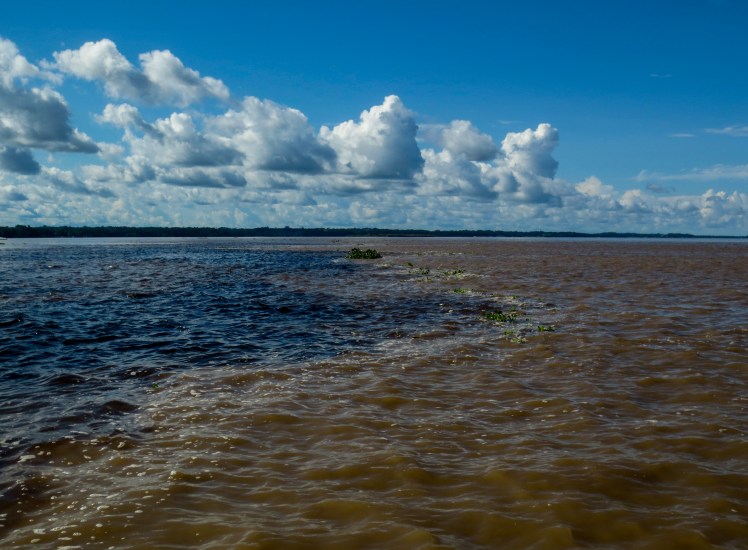
We spent our first day in Iquitos trying to adapt to the 1000 per cent humidity and also paid for a small boat to take us to the actual Amazon River, something that had been the determining factor in us choosing Iquitos for our jungle fix over the Amazon basin tours offered in Southern Peru. The next day, we spent most of the day travelling around 8 hours first by bus, boat and then another boat to get to the Tapiche Lodge, which was to be our home for the next four nights.
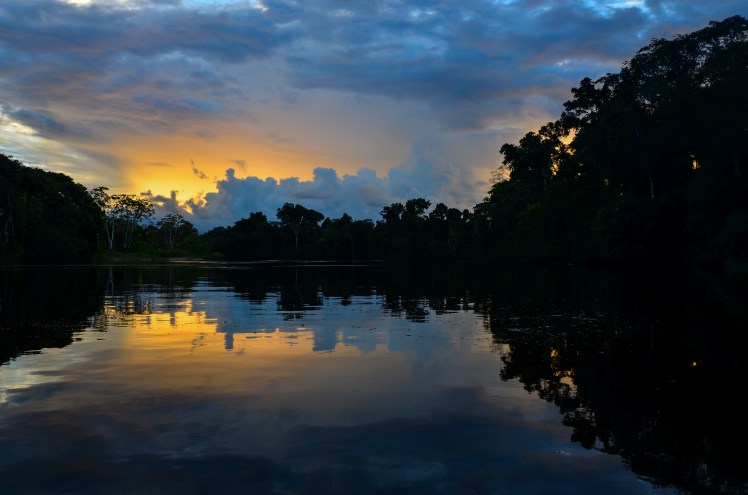
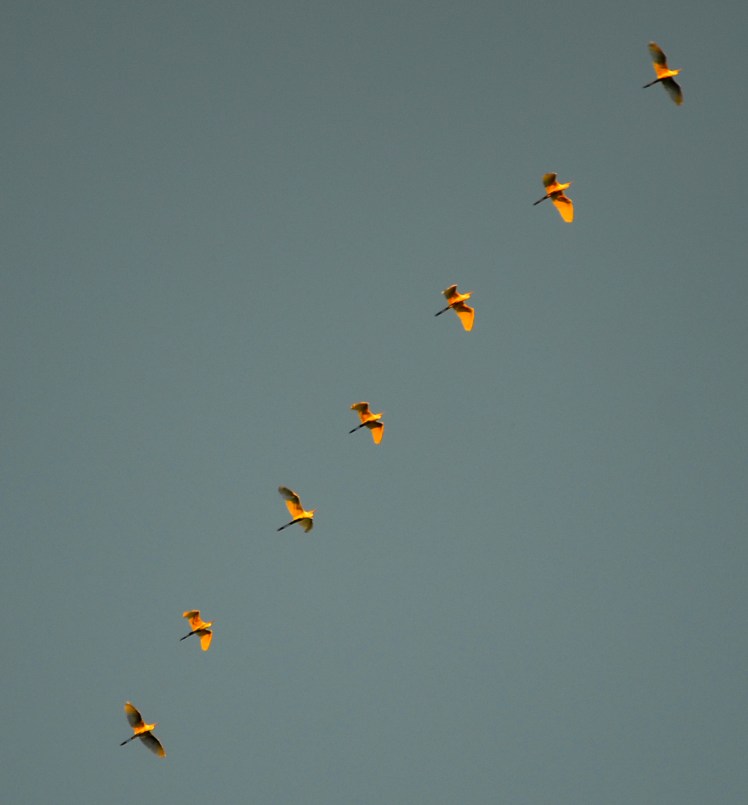
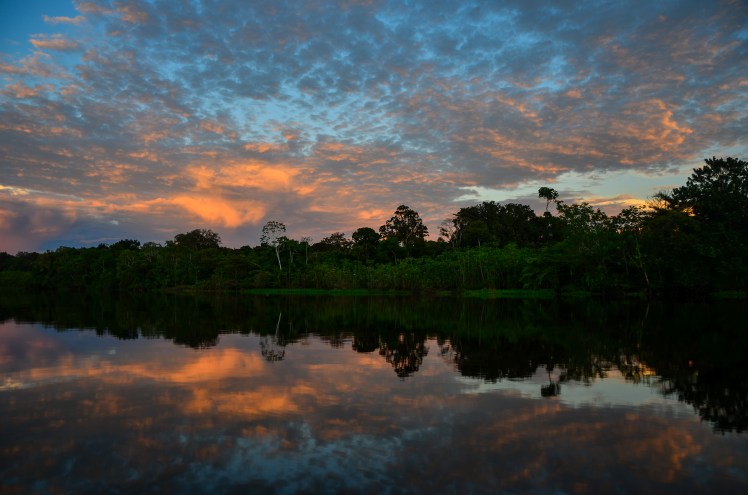
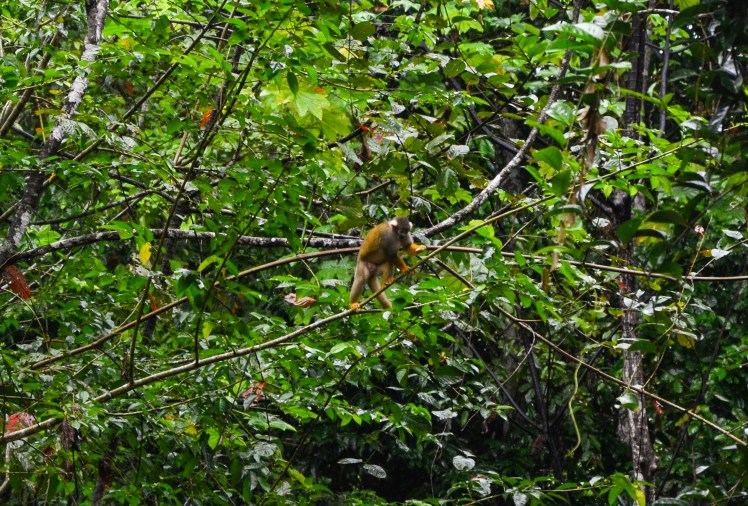
The first sunset of the jungle trip was spectacular. Lying on a boat, the sun lighting up both the sky and the river. Listening to birds calling, monkeys howling and watching the pink and grey dolphins circle around us. Surely it doesn’t get any better than this, I thought to myself. Unfortunately, it didn’t.
The next day started out in a similar vein, canoeing through small creeks viewing different bird species and the occasional monkey. After a couple of hours in the canoe, our guide Katoo decided it was time to explore the jungle on foot. This was when the problems started.
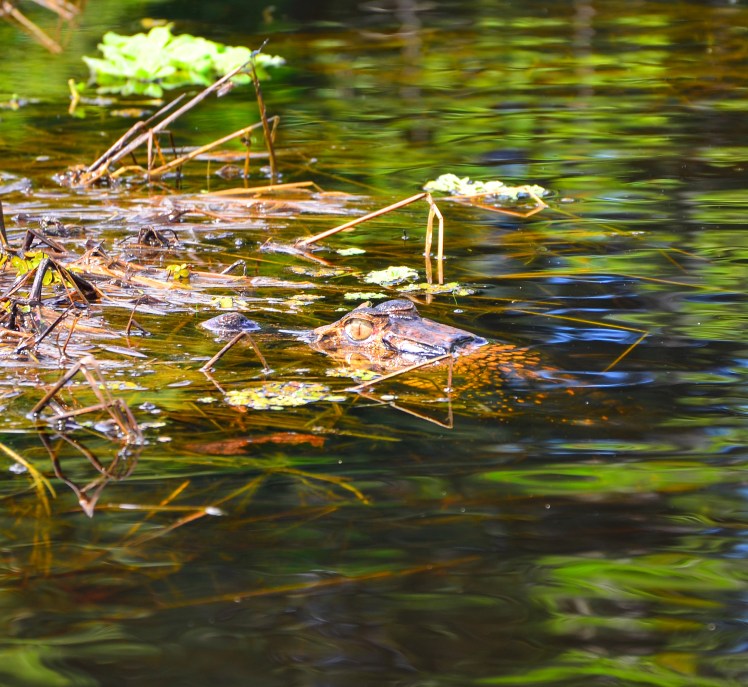
We had been warned about the mosquitos in the Amazon, and while on the boat and at the lodge they hadn’t been too bad. But as soon as we left the canoe to walk through the thick jungle, swarms of them were following us.
I thought I’d had it bad with the mossies on this walk (and the next day I counted over 20 bites on my left hand) but when we returned to the boat and I looked at Erin, I could see that she had fared considerably worse, with a number of quite large bites already forming on her forehead.
These lumps on her forehead continued to increase, and after returning to our lodge it was pretty clear they were not mosquito bites. After discovering more lumps on her lower back, we wondered if it was bed bugs. But as the rash began to spread to her face it was pretty clear it was some form of allergic reaction.
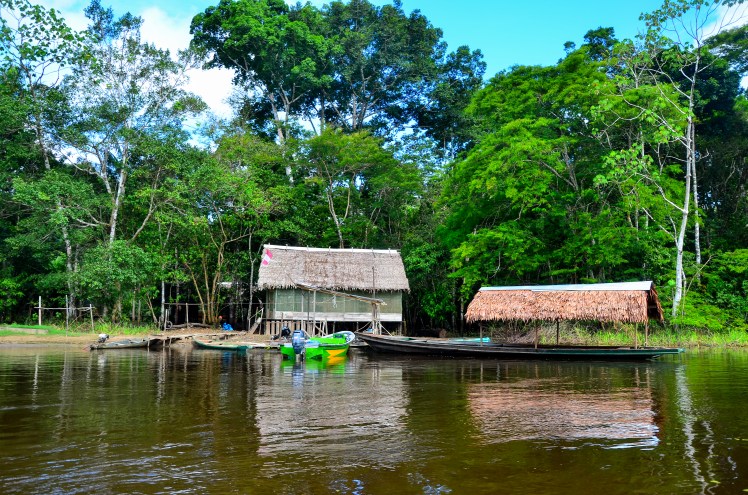
Our lodge had only basic medical supplies and expertise (including a suggestion from one of the workers for Erin to put sugar mixed with water on her skin and take a shot of apple cider vinegar), and was 3.5 hours from the closest hospital. Even an anti-histamine didn’t stem the tide as the rash continued to spread over Erin’s body. Her ears and more worryingly her throat started to swell.
A nervous half hour followed and when Erin realised that the swelling in her throat had worsened, we decided it was time to get to a hospital ASAP. The 3.5hr trip to the hospital wasn’t without incident, with the engine stalling and unable to start for 15 minutes. Luckily by this stage Erin’s throat had stopped swelling, so I was less worried she was going to choke to death and now only concerned that we may have to spend a night outside in the middle of this mosquito infested river.
Our driver was able to start the boat again and managed to navigate the last hour of the trip in the dark with only my phone to light the way, and we arrived in the river town of Requena. The limited facilities at the hospital were eye-opening, but after visiting a couple of different pharmacies and Erin getting an injection, her rash and swelling finally started to abate and we could relax.
Given we had no idea what had caused the allergic reaction, and as the lodge was so isolated, Erin decided not to return and instead made her way back to Iquitos. I made the trip back to the lodge, determined to enjoy the last few days of the jungle given we’d spent so much money on the tour. Things didn’t get off to a good start when I heard a guy from another boat whistle in our direction and when I turned I saw him lift his rifle and point it at the boat. I’m not sure if this was a joke or a threat. Maybe he was mates with my driver. Maybe he’s one of the many hunters who hates Katoo and recognised his boat. Whatever it was, it didn’t do anything to help my enjoyment levels.
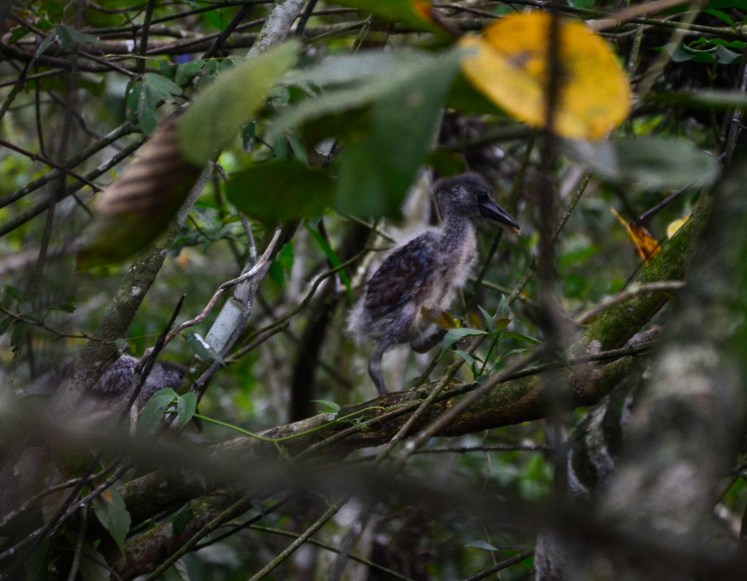
Thankfully, things settled down after this. Erin made it safely to Iquitos, and I was able to enjoy the last two nights in the jungle. There was more floating down rivers while listening to the sounds of the jungle. More species of animals and birds to see. More mosquitos.
In an earlier blog Erin mentioned the impact of expectation on experience. And there is nothing that increases expectations more than money. While I enjoyed my stay in the heart of the jungle, I didn’t love it – which was probably what the money required. I don’t think my view would’ve changed if Erin was able to stay the entire time. And I don’t think it was the fault of Katoo and the Tapiche Lodge, who are doing a great job under difficult circumstances to preserve the fragile eco-system. In the end, I think I just rather mountains and coastline than jungle. It’s not you Amazon, it’s me.
Andrew

 dred
dred 