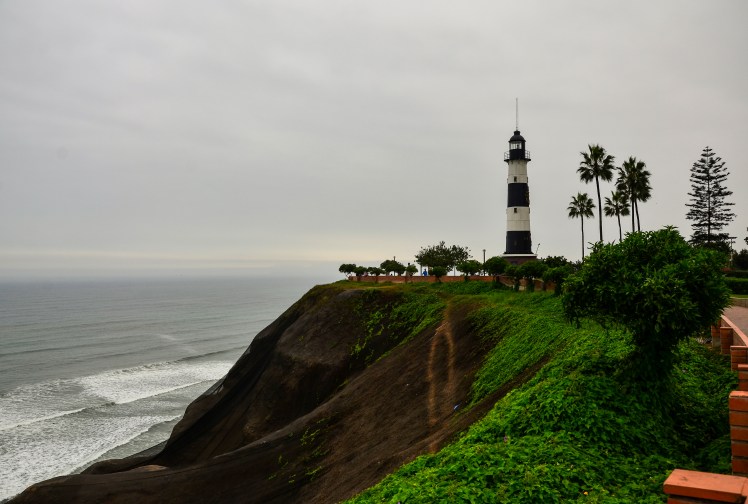
I admit I was fairly happy to hop on the plane and say goodbye to Iquitos and the jungle. It definitely wasn’t the experience I’d hoped for! Anyway, these things happen. We had about a week to get from Lima to Quito to meet Ashley and Jess who were arriving late on the 2nd of June. This was a great opportunity to see some of Peru’s northern coast. Lima was nothing special but an okay spot for 24 hours. Like most tourists, we stayed in the Miraflores area. Lima is bathed in a grey glowing haze for many months of the year thanks to the Humboldt ocean current. It teases both imminent sun and rain, both of which rarely materialise. I found this to be quite depressing and would never be able to live there for this reason.

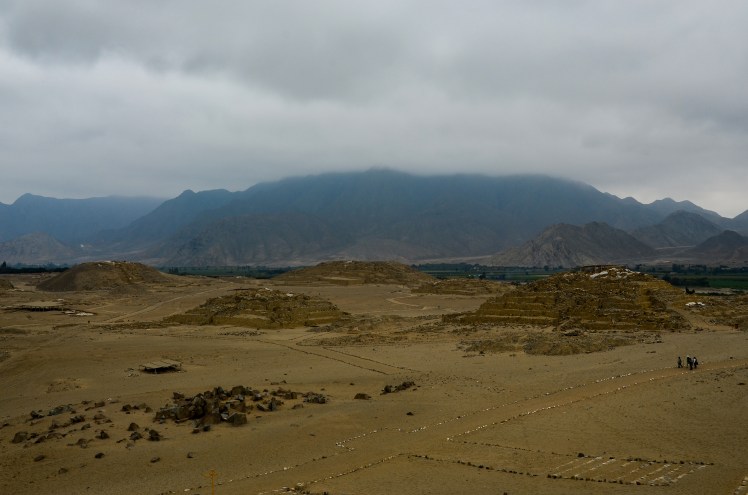
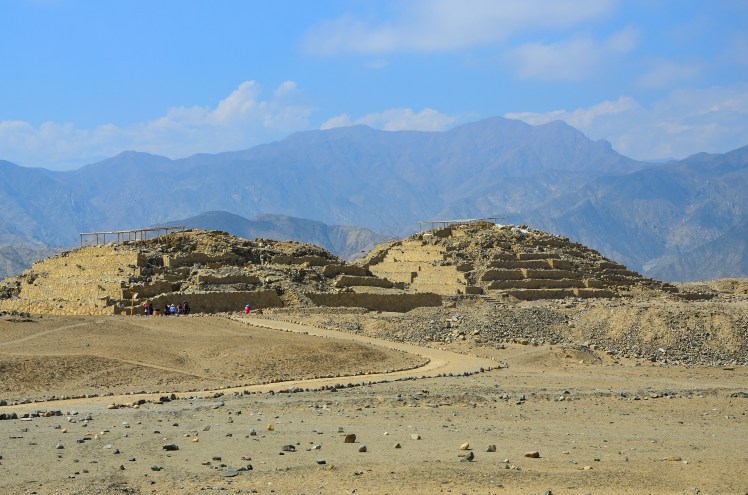
A 5 hour day bus got us to Barranca, where we stayed as a base to visit Caral, an ancient archaeological site. The big blue signs that indicated archaeological sites dotted the barren landscape north from Lima, and this also continued after Barranca. The Caral site is dated at approximately 2600 BC and is a construction of the Norte Chico civilisation, believed to be the first civilisation of the Americas (although not the first culture, there is evidence of human occupation much earlier than this). After reading ‘1491’ by Charles C. Mann, I was very keen to visit this region of Peru. The book states that this early civilisation has not received the recognition it deserves, and that pre-Columbian America was more advanced than previously thought.
The Caral ruins are not the oldest in the area (this title belongs to nearby Huaricanga, also a product of the Norte Chico people and dating back to 3500 BC – older than the Egyptian pyramids), however they are believed to be the largest. I find it fascinating that archaeologists have found no evidence of war or violence at Caral.
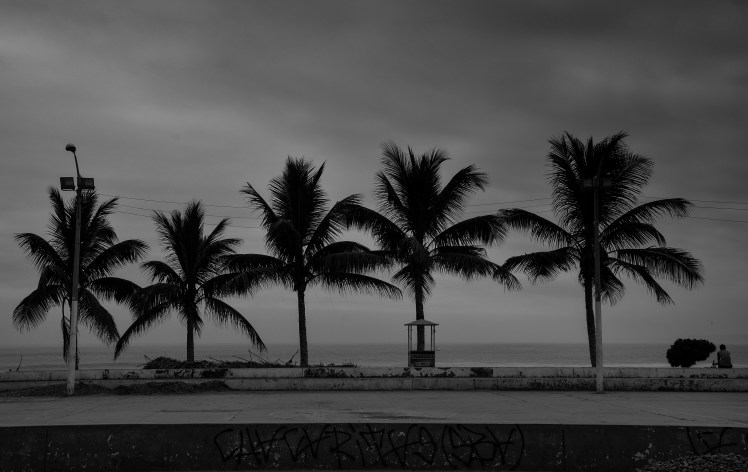
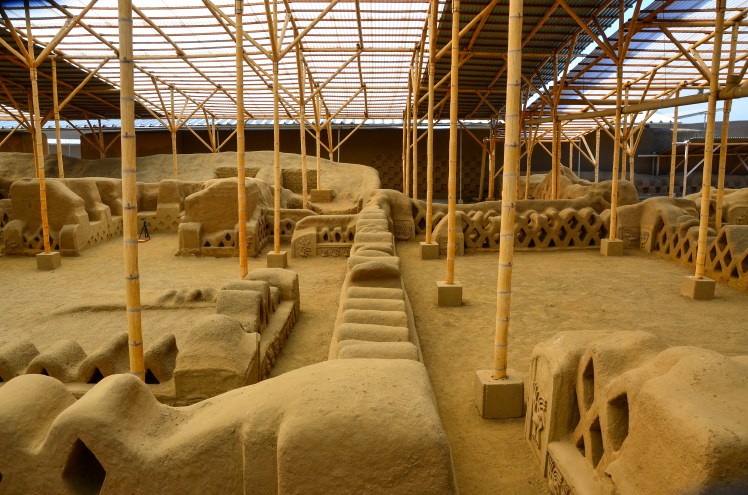
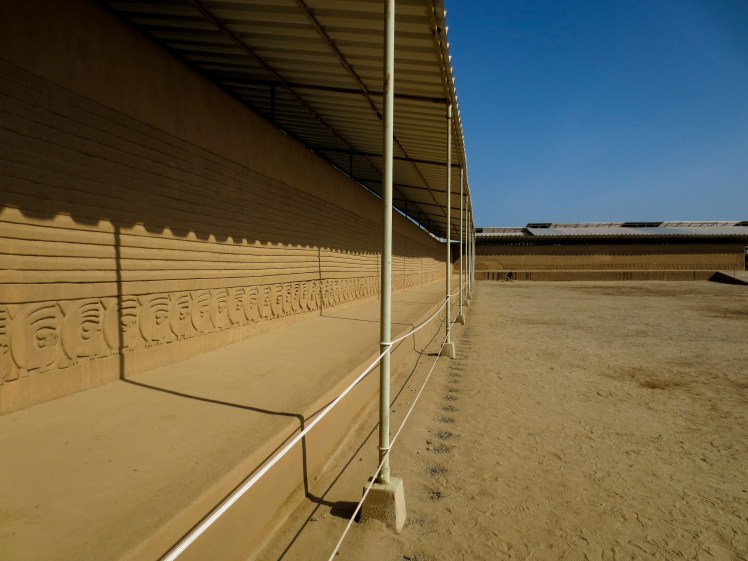
Aside from seeing Caral, we enjoyed the cheap benefits (such as $3 menus of the day) of being off the tourist trail in Barranca. From here, we booked an overnight bus to Trujillo. Turns out that it wasn’t so much an overnight bus as it was a bus that happened to run at night. It was a lot shorter than we’d been told, which possibly had something to do with the driver going 130km/h for most of the journey up the Pan Am highway. It was difficult to sleep, largely due to the strong stench of feet wafting through the cabin, and for Andrew because his legs were wedged into the reclined seat in front of him and he couldn’t move. We arrived in Trujillo at 2:30am and decided to see if we could get into our room early at the hostel we’d booked in the nearby beach town of Huanchaco. Great success. After enjoying an extra few hours of sleep in a bed that we had not expected to have, we spent the rest of the day relaxing by the sea and visiting the Chan Chan ruins. Chan Chan is the largest adobe city on the continent and was constructed in approximately 850 AD by the Chimu people, who were defeated by the Incans in the late 1400s. The architecture was very different to the Incan ruins we had seen.
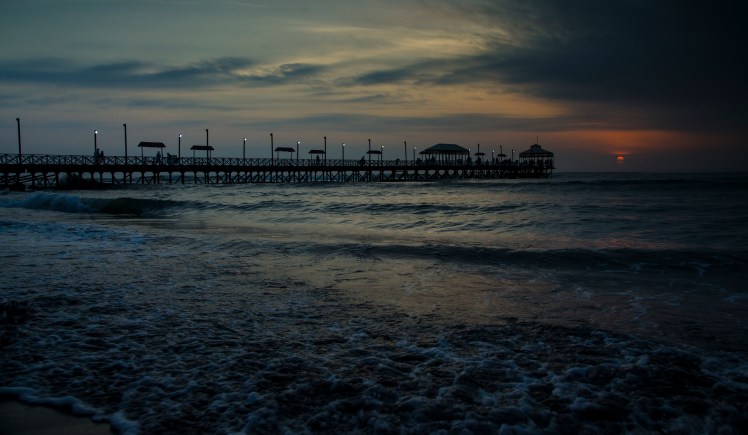

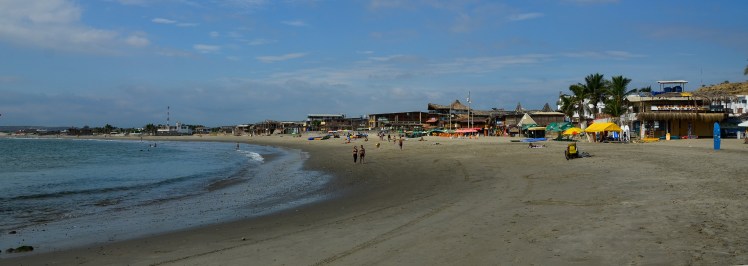
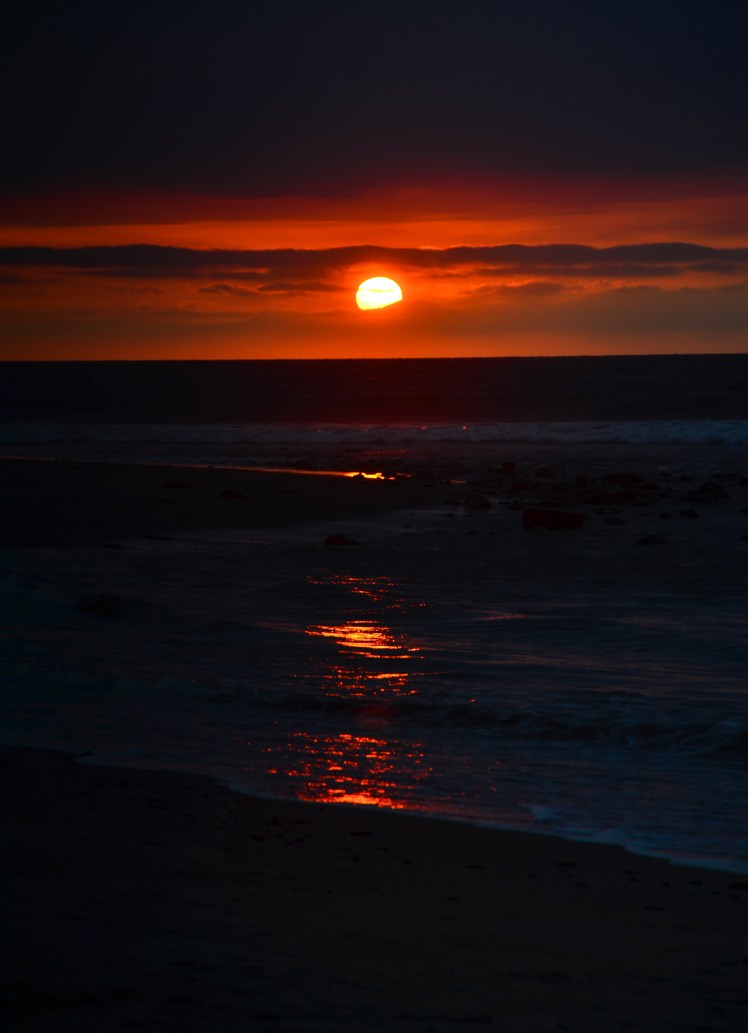
After another overnight bus, which also travelled at ridiculous speeds but didn’t smell quite as bad this time, we arrived in the coastal town of Mancora, which felt like Huanchaco’s younger and drunker sibling. It’s louder, bars line the beach and a walk down the main street involves being approached by hordes of insistent mototaxi drivers offering their services. The beach at Mancora is a lot prettier, but we much preferred the laid back fishing village feel of Huanchaco. Mancora was, however, a good way to break up the journey and get in some beach time before our next bus crossing the border to Guayaquil in Ecuador.
This border crossing has a bad reputation, so we made the journey during the day. We didn’t see much of Guayaquil as we stayed near the bus terminal and took our final bus to Quito the next morning. The advertised 8 hour journey actually took 10, which seemed like an appropriate way to finish the week long bus trip north.
Erin
 dred
dred 