Let’s be honest, the first thing that comes to your mind when I mention Colombia is drugs. This is understandable. A broken country after a long civil war, a landscape (huge swathes of jungle) perfect to conceal narco activities and an ideal location to influence both production and distribution of cocaine, media reports on Colombia over the past 40 years have almost entirely been concerned with the drug trade.
Given the reasons above, the fact that Colombia is constantly linked with the drugs trade is unavoidable. However, this stereotype is something that Colombians, most of whom aren’t involved in industry and many of whom have been either directly or indirectly exposed to the tragic consequences of the drugs trade, have to deal with regularly. It seems very cruel that those who have suffered the most from the criminal activities are those who are also suspected of being narco traffickers every time they travel to a different country.
Unfortunately, this outside perception of Colombia may not change any time soon. While the focus of the cocaine production has shifted towards Mexico, Colombia remains one of the leading producers. A prominent representation of Colombia in popular culture over the last couple of years has been the TV show Narcos. It’s not surprising that many Colombians passionately dislike the show.
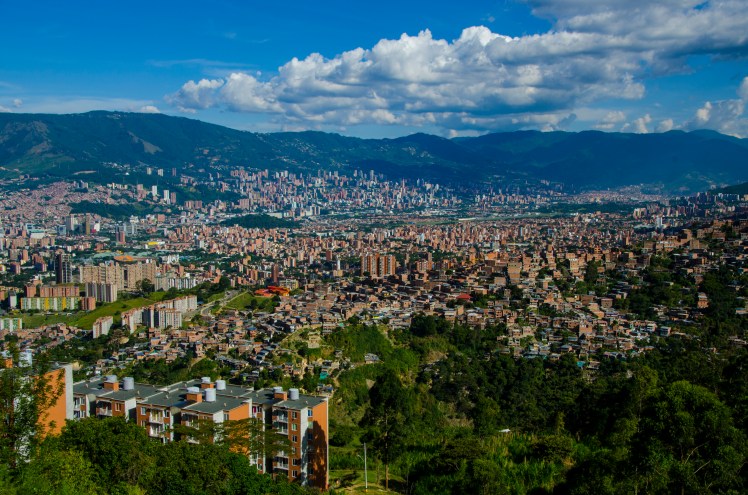
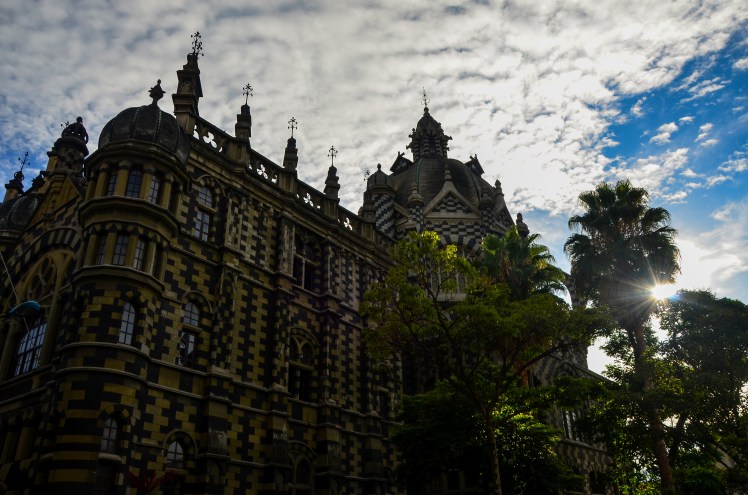
This tragic history of the drug trade, and also how Colombians are perceived in the outside world are particularly important to understanding the experience of visiting Medellin. The second biggest city in Colombia was home to the most famous narco of all (Pablo Escobar), and had a murder rate reach as high as 381 per 100,000 inhabitants in 1991 (the highest rate in 2017 is Caracas in Venezuela, with 130 per 100,000), when it took the unenviable crown of being the most dangerous city in the world. Fast forward 26 years later, and Medellin was probably our favourite big city in South America, and we ended up spending 11 days there, despite there being no iconic ‘must-see’ sights.
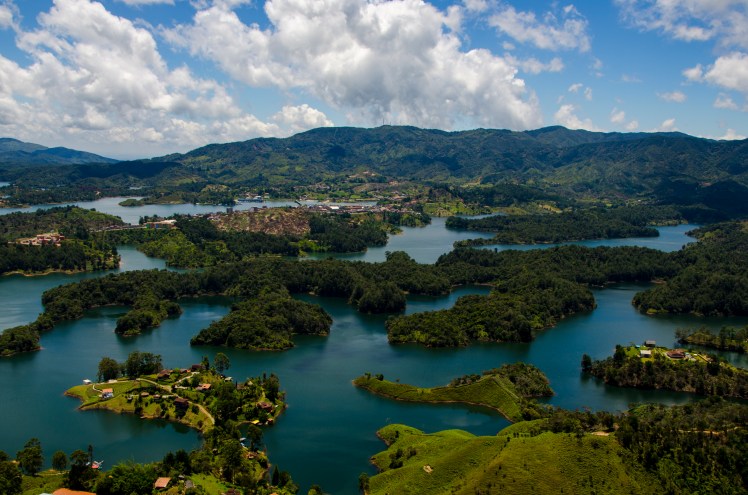
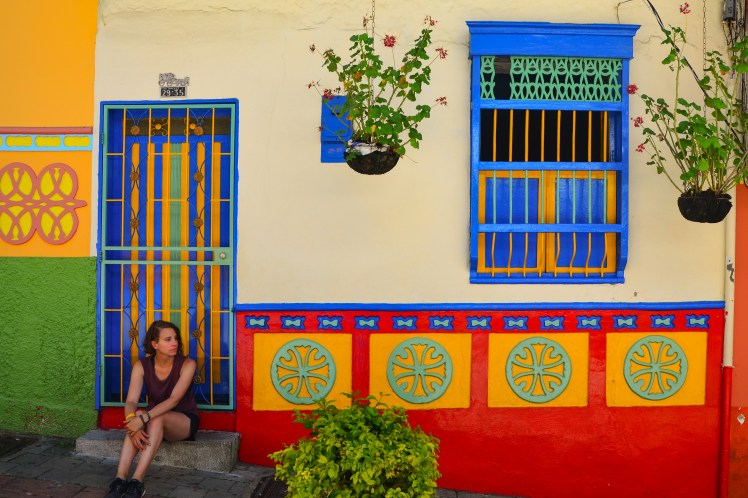
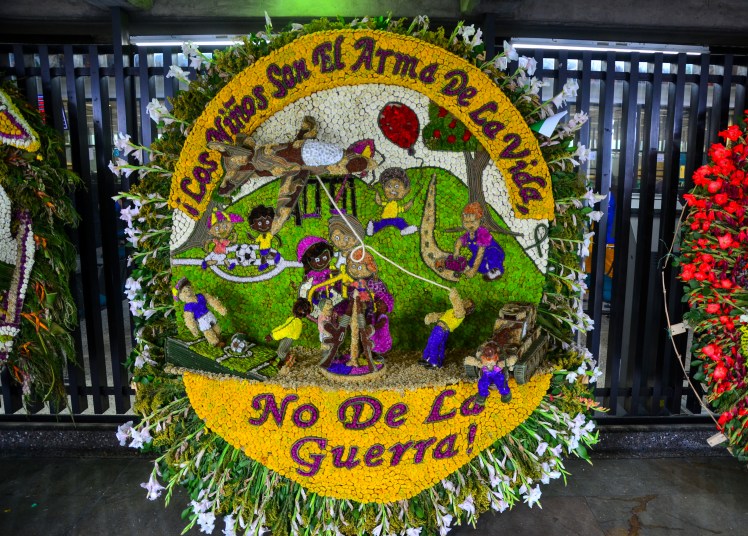
The surrounding countryside was very scenic, and we had an enjoyable day taking a bus out to the cute town of Guatape, with its colourful houses and impressive views. We spent a couple of days brushing up on our Spanish at a café near our accommodation, went to some salsa bars and indulged in several ice creams and brownies. We visited the Museum of Memories and did a couple of walking tours. We went to the Flower Festival, one of the biggest events in the city, which involved a parade with over 500,000 people watching. And like every other event with over 500,000 people involved, it was too crowded to derive much enjoyment, although the nearby supermarket handing out free beers was doing its best.

Free beers aside, one major reason we loved Medellin so much was the people. In a lot of places around the world, tourists (often justifiably) are treated as either imposters or walking bags of money. Hoping to change the perception of their city globally, Medellin residents are happy foreigners are coming to learn more about their hometown and possibly even view the emergence of gringos as a symbol of how far the city has progressed. As a result, tourists in Medellin are made to feel more welcome than anywhere else I’ve been in the world. We were stopped numerous times in the street with people wanting to ask us where we’re from and welcoming us to their city.
And it’s not just that the people are polite. They all seemed so happy as well. It really says something of the resilient nature of humans that a city that was so devastated not all that long ago is now such a fun place to be. It really is contagious.
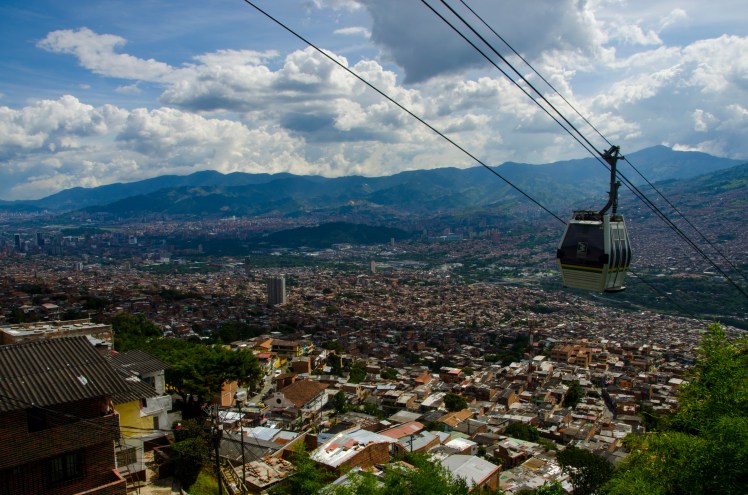
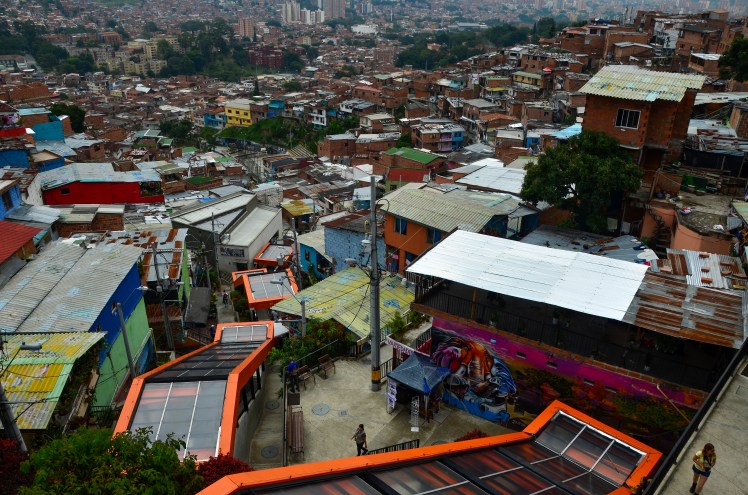
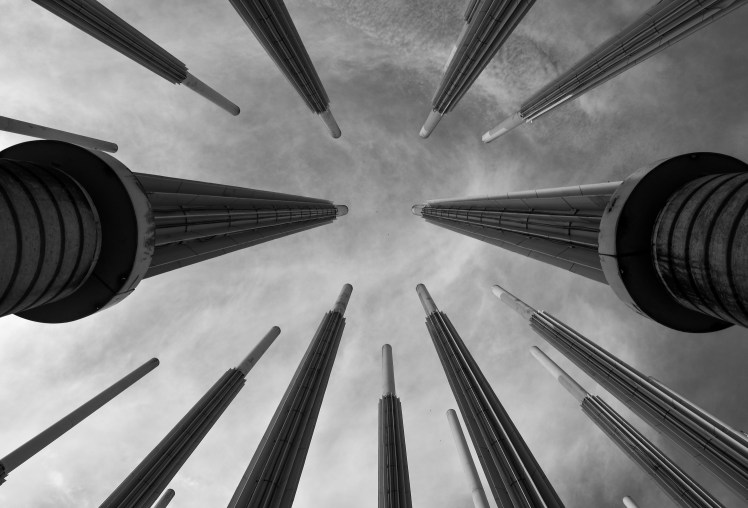
Indeed, the whole progression of Medellin from the most dangerous city in the world to now was uplifting to learn about. Before arriving in Medellin, I read that it was voted most innovative city in the world in 2013. My first thought was that they’ll hand out awards for anything these days. But the more time I spent in Medellin, the more I realised the city totally deserved it. Over the last twenty years, metro lines, cable cars and even massive outdoor escalators have been built, allowing greater access to the entire city for the poorer neighbourhoods. The installation of art and libraries in public spaces has transformed a lot of former no-go areas into places that can be enjoyed by all, and given those in poorer districts a greater chance at finding other career paths rather than falling into the narco trade.
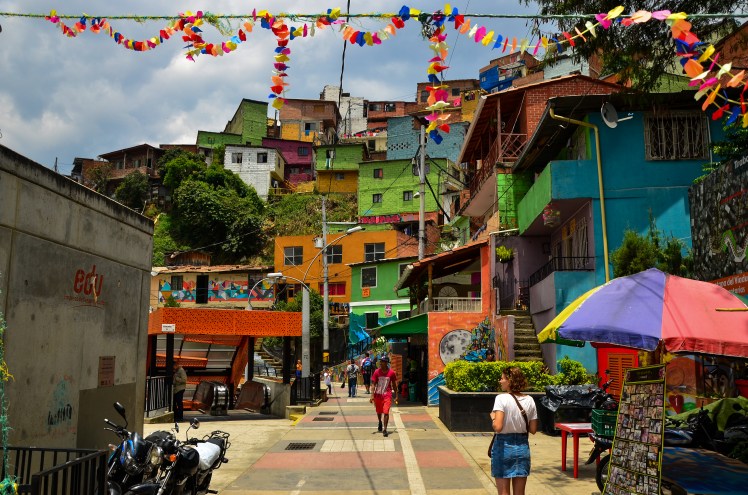
Even neighbourhoods that had been outside of the government’s control, or just ignored by politicians, are being reinvented. Comuna 13, once the most dangerous district in Medellin is now full of colour and life, thanks in large part to passionate and courageous local activists who – particularly through street art and hip hop – are giving the children alternative ways (other than gangs) in which to feel part of a community.
Colombia still has rampant inequality, and its location will always be desirable to drug producers and traffickers, so there is some worry that these improvements are only a temporary respite. But no matter what happens in the future, I’ll remember Medellin in 2017 as an incredibly uplifting place that against significant adversity displayed some of the best qualities that human nature has to offer.
Andrew
 dred
dred 