For long-term travellers through Central and South America, Costa Rica and Panama tend to be seen as a bit of annoyance and many people pass through them quickly. We were told Panama is culturally uninteresting and very expensive compared with other Latin American countries and although everyone acknowledged that Costa Rica was very beautiful, people had said that it cost too much money to do anything. With this in mind, our expectations were low for this section of the trip and we decided to travel through these two countries reasonably quickly.
The two weeks we spent in Costa Rica and Panama turned out to be very enjoyable, with Costa Rica in particular being a highlight. The information we’d received before arriving in the country turned out to be somewhat true, in that activities cost more money than other places we’d been. If you wanted to involve yourself in all the zip lining, rafting and bungy swings you’d rack up a hefty credit card bill in Costa Rica fairly quickly.

Maybe it’s the fact that extreme sports don’t interest us, but we were able to still enjoy some of the amazing national parks and biodiversity that Costa Rica has to offer while also managing to stay under our budget. Aside from a quick visit to the dull capital of San Jose, we spent our time in Costa Rica in three towns bordered by nature reserves – Puerto Viejo and the nearby Cahuita reserve; La Fortuna, located at the base of the Arenal Volcano; and Monteverde.
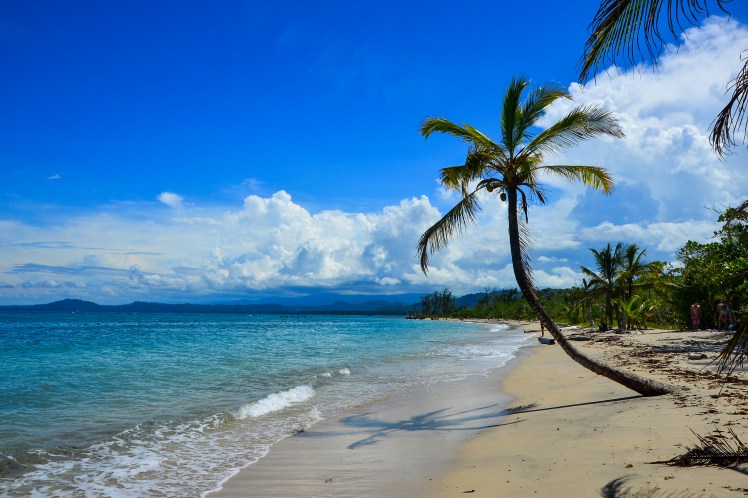
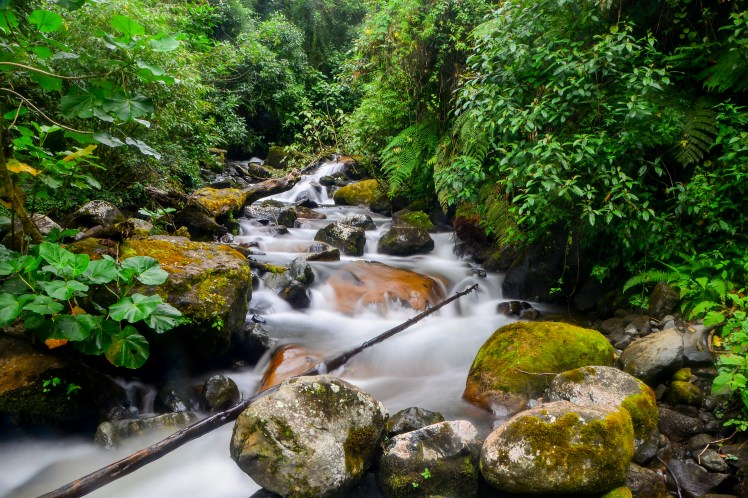
Of these three nature areas, Cahuita was my favourite. It was a smallish jungle reserve located right on the typically beautiful Caribbean sea. Within minutes of entering the reserve, we’d already seen a parrot, toucan and some raccoons. The path hugged the coastline for several kilometres, occasionally shifting on to the beach, and if the walking became too difficult in the heat there were plenty of opportunities to swim. We ended up seeing several other animals, including a pit viper, monkeys and a coati.


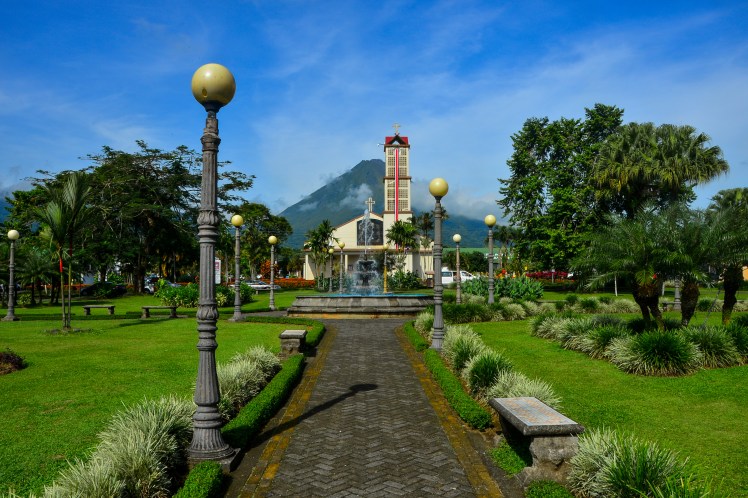
While not quite at the same standard as Cahuita, La Fortuna and Monteverde were both enjoyable as well. La Fortuna was named in 1968 after the Arenal Volcano erupted destroying all of the other towns located nearby. The volcano is a looming presence over the town, and although summiting the volcano is not permitted there are several different walking trails around the base. We did one tour that included some nice views of the volcano, as well as some animal and bird spotting and a visit to some natural hot springs.

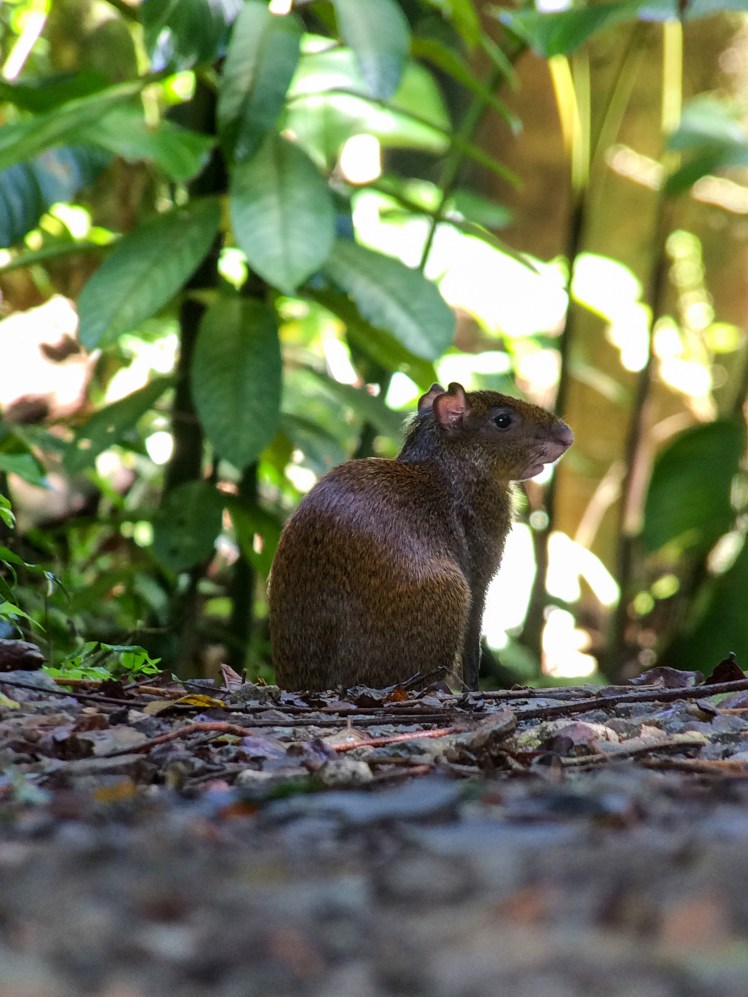
Monteverde is a small town in the cloud forest located near a number of different natural reserves. We decided to visit the Curi Cancha reserve, as I had heard it was the best place to see the spectacular Quetzal bird. We hired a guide, thinking that would maximise the chances of seeing the Quetzal. Unfortunately it wasn’t the correct season, but having the guide and his giant scope allowed us to see a number of birds and animals that we definitely would’ve missed if we were exploring the reserve ourselves.
In order to stay under budget in Costa Rica, it did mean that we skipped a few activities. There were waterfalls and hikes near La Fortuna and other reserves near Monteverde and Puerto Viejo that we would’ve liked to visit. And it was very difficult to find any outdoors activities that didn’t incur a cost – even the most basic hiking trail seemed to have an entry fee or require a taxi in order to visit. But it’s hard to get too angry at a country that is choosing to preserve wilderness areas and make money from visitors as opposed to clear these areas for other economic purposes.

Like Costa Rica, I can see why people disliked Panama, but we still managed to have a good time. Panama City, with its sky scrapers and big banks, felt more like a Chinese or US city than something in Latin America. While far from a cultural experience, it was nice to stay a few days in a place that we were able to find delicious Italian food, and I was also able to buy a new camera (my other camera having died a slow and painful death one month after falling into a river Peru) at a decent price, something that would’ve been difficult in all of the other cities we’ve visited so far on this trip.

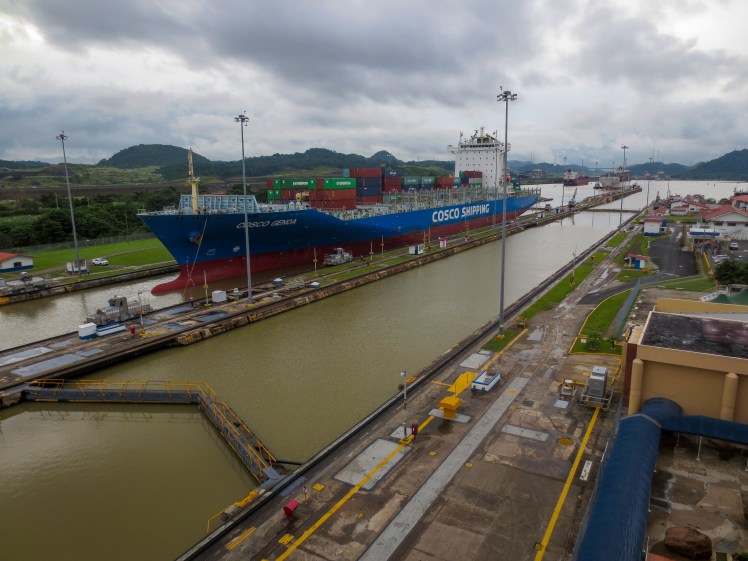
The big tourist attraction near Panama City is of course the canal. We’d been told that it wasn’t overly exciting and a bit of a tourist trap, but we ended up spending most of an afternoon there watching the container ships go through the locks. We both really enjoyed trying to work out how the ships progressed through the locks from 26m altitude at the highest point, down to the Pacific Ocean.
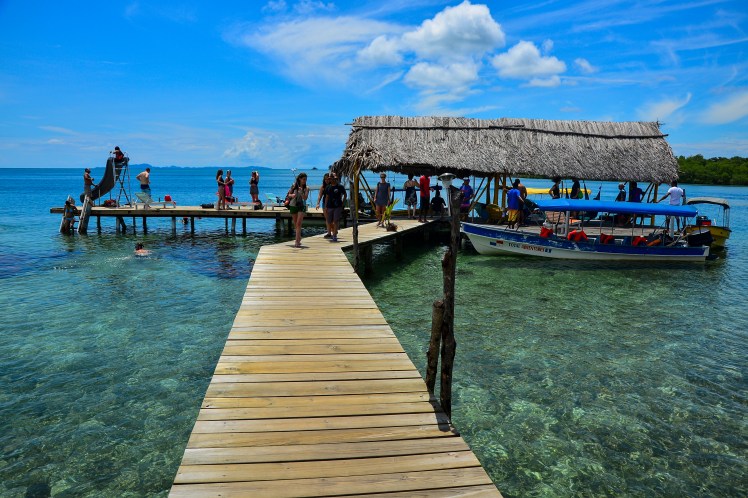
The other stops we had in Panama were Boquete, a town in the highland cloud forest, and Bocas Del Toro, a group of islands in the Caribbean Sea. Having low expectations and not feeling any pressure to see any “must-see” sights meant it was a very relaxing 5 days. As our trip draws towards a close we are for the first time starting to feel an element of time pressure in trying to fit in all that we want to do before we return home. But even with that pressure beginning to hover over us, it’s sometimes nice to spend a few days lying in a hammock reading a good book.

Andrew
 dred
dred 