Arriving in Santa Marta after an overnight bus from San Gil felt like we’d entered a new country. The bumpy Colombian interior had been replaced by the long flat Caribbean coastline. The jumpers and track pants went to the bottom of the bag and the shorts and thongs to the top. Reggae tunes were playing and everybody was at the beach.
The oldest city in Colombia, Santa Marta is a hole. Walking through the streets felt like you were in a place about 300 years past its prime. Most buildings were in bad need of at best a paint job and at worst a complete restoration.
Santa Marta’s popularity on the gringo trail has nothing to do with it being the oldest city in Colombia, or it being the city where Simon Bolivar died (although there is a pretty good museum), but its location. Nearby are some of the nicest beaches on the continent. There’s also 5,000m+ peaks that can be seen from the ocean.

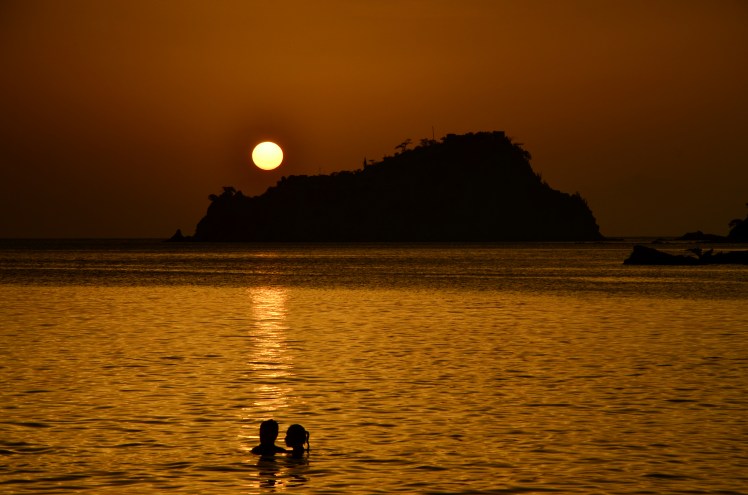
Our first two days in the Santa Marta region were spent at the resort town of Rodadero. It was an enjoyable couple of days, drinking beers on the beach and going for the odd swim to cool down. The beach experience in South America, however, is nowhere near as relaxing as in Australia. People are constantly trying to sell you stuff. Sometimes this comes in handy, like when you want to get another cold beer you don’t have to leave your seat. But the next thirty people approaching when you want nothing more than peace and quiet get pretty annoying. After two days my patience for sitting on the beach not doing much was coming to its end, and I was looking forward to heading to the nearby Tayrona National Park.

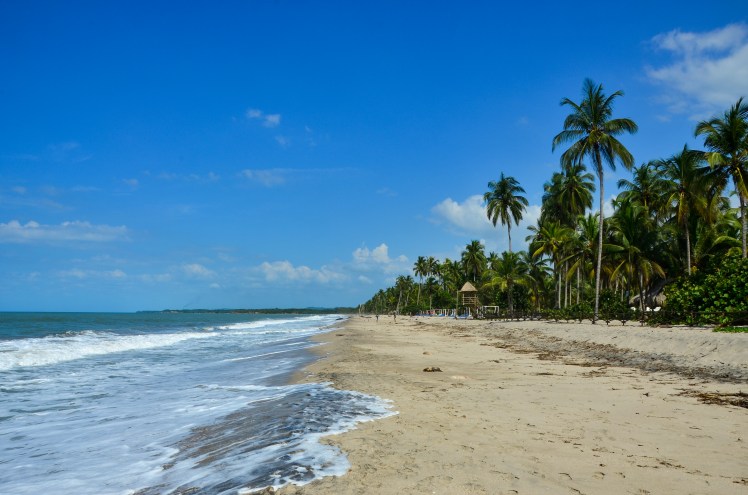
I’d first heard of Tayrona when reading a book about some people who travelled through South America in the mid-1990s. They’d described it as this absolute paradise, with tropical jungle stretching all the way down to uncrowded white sand beaches. Twenty years on, it’s certainly no longer uncrowded, but the beauty of the place remains. We walked for a couple of hours into the national park and stayed two nights at Cabo San Juan, spending our days swimming, reading and exploring nearby beaches.
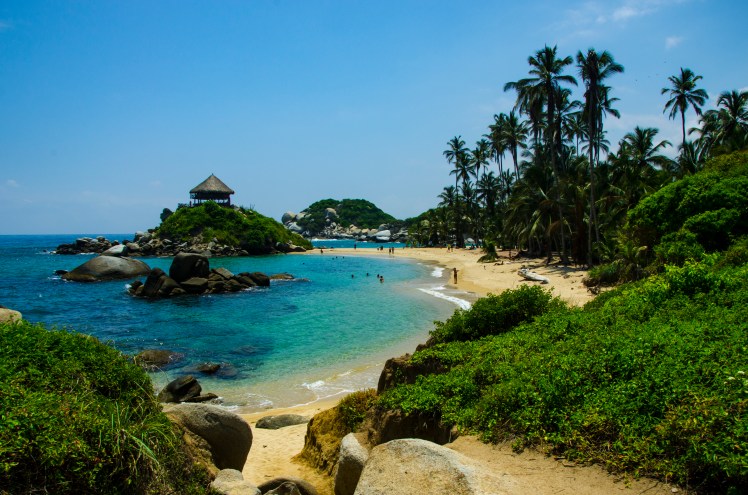
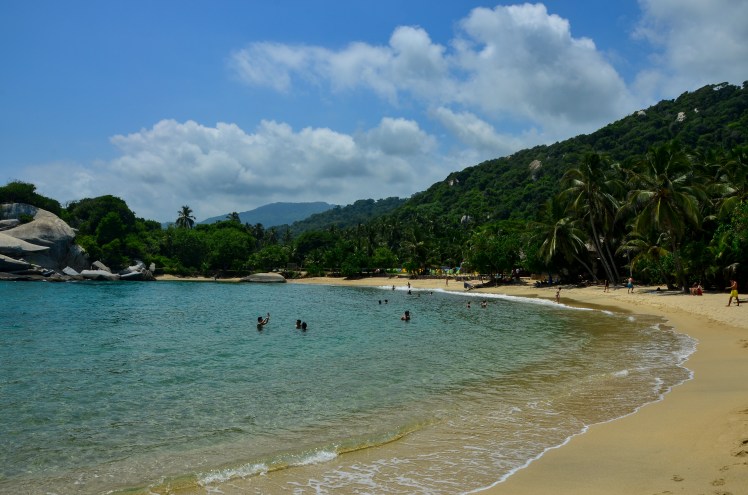
While in Tayrona we had two big decisions to make. The first was which campsite to stay at, and we feel like we nailed the choice of Cabo San Juan, with it being clearly the most scenic and also one of the few swimmable (there are some very strong rips along the Caribbean coast) beaches that were walking distance from the entrance. The other decision was between a hammock and a tent. Concerned about the mosquitos at night (of which there were many) we decided that a tent would be the better option. The first night was so hot that I barely slept at all. After a big afternoon storm it was a lot cooler on the second night, but our tent was completely flooded and we had a horribly uncomfortable night’s sleep on soaking mattresses.
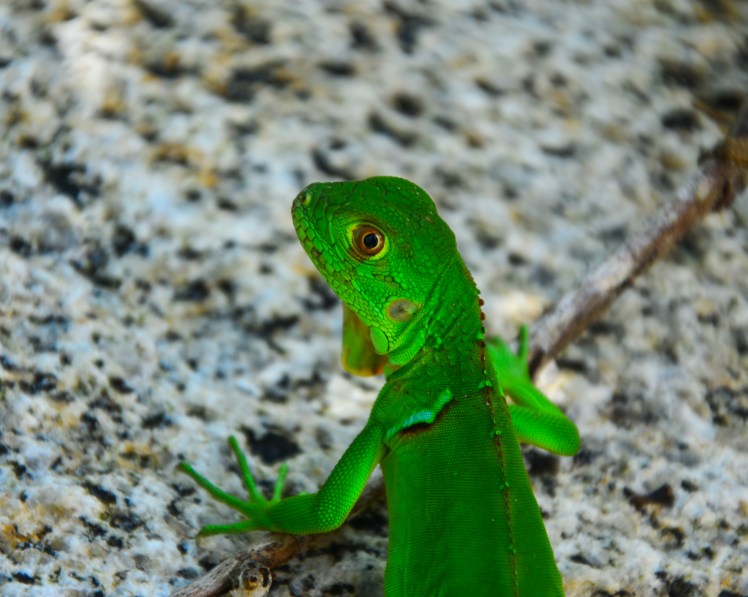
Our next trip out of Santa Marta was to the fishing village of Palomino, home to supposedly another one of the best beaches in Colombia, where you have the possibility of viewing 5,000m+ mountains. Like Tayrona, the beach was very scenic, lined with white sand and palm trees. Like a lot of the Caribbean, the beach had a very big rip and swimming would’ve been very dangerous. The snow-capped peaks rarely emerge from the clouds. In the end we spent most of our time lounging around at the very nice hostel pool.
Our final little getaway from Santa Marta took us up into the Sierra Nevada de Santa Marta to the town of Minca, where we stayed in a sustainably run eco hostel that grew most of their own produce – that they cooked for us onsite – and featured a great view back down the hills all the way to Santa Marta. It was nice to get out of the scorching heat of the lowland areas and walk around a little, and the view from our room was fantastic. However, I did have one minor complaint with the room. It didn’t have windows. Completely open to the forest outside, we ended up having a few visitors in our room. Much to Erin’s pleasure, we had two cats that kept coming in to say hi throughout the night. A far nastier surprise was having a very poisonous snake visit us in the afternoon.

After our time in Santa Marta, we caught a bus to the jewel of the Caribbean, Cartagena. A UNESCO world heritage site, it boasts one of the best old towns not just in South America, but across the world. The old town is a decent size and every street you turn onto feels like it gets prettier and prettier.
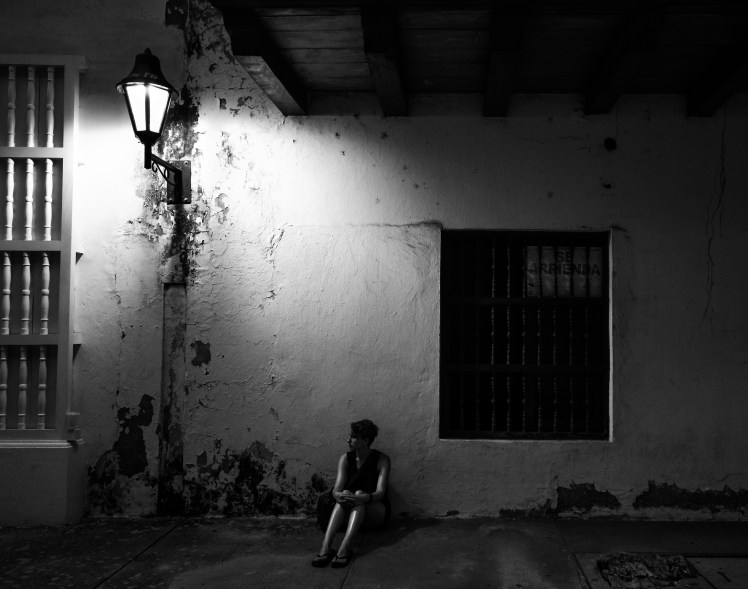


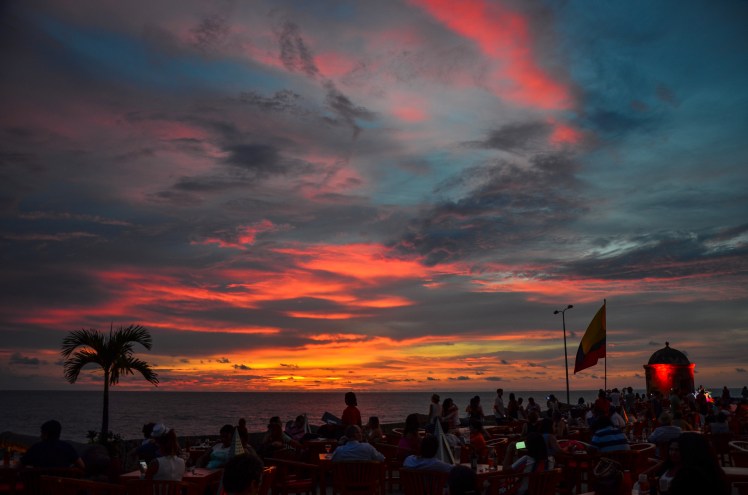
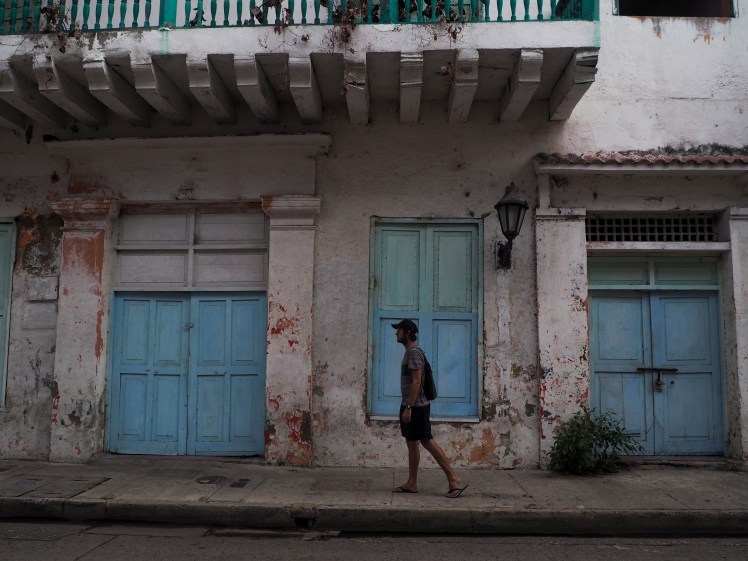
Cartagena is also clearly the most popular tourist spot in Colombia. It’s the only city that seems to exist separately from the 1 to 2 month Colombian loop and is seen as a holiday destination in its own right. This not surprisingly brings with it numerous people working in the tourist industry, selling everything from city tours and traditional clothing to illicit drugs. Like Cuzco in Peru, it becomes hard to continue to appreciate the amazing architecture when you’re having to say “no gracias” every 2 minutes.


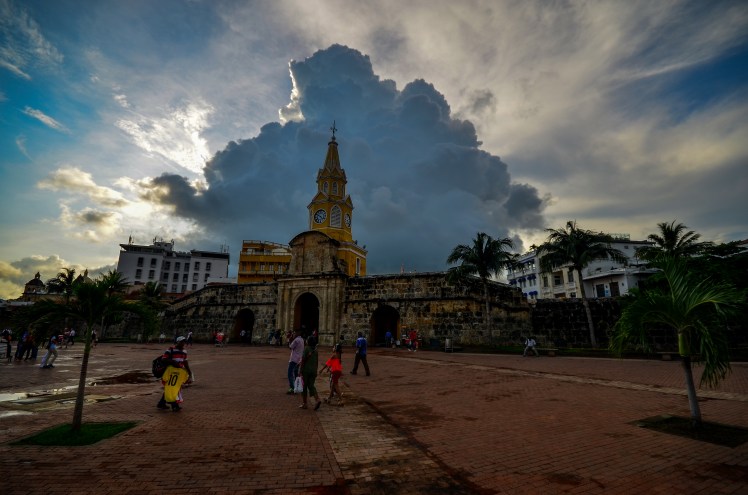
We’ve frequently used Instagram as a tool for determining where we should visit on this trip. After hearing about a place from someone else, I’m sure we’re not the only ones who have a quick look in google images to see what it looks like. Northern Colombia was, as we expected, incredibly beautiful. What we hadn’t quite anticipated was how uncomfortably hot and full of insects the region could be. You need to exercise a degree of caution when looking at images on social media, and Santa Marta and Cartagena were a timely reminder of that fact.
Andrew
 dred
dred 
Pics are 👌👌
LikeLike