A number of friends of mine have completed marathons over the past few years. No matter the time, or what training program they followed, they all basically said the same thing. Around 35km into the race, they hit a big wall and the marathon started to really hurt.
I’m sure our trip has been substantially more enjoyable than the running of a marathon, but as we closed in on the 11 month mark, I started to feel like I hit a travel wall. Bewildering parts of the Latin American travel experience that months ago I would have laughed at were beginning to really annoy me. We skipped a number of popular activities because they felt like inferior versions of things we’d already done on the trip and I was more than ready to never have the same initial conversation that you have with every new person that you meet in a hostel (where are you from, how long are you travelling for, where have you been etc.)
A big part of this sudden fatigue about the trip was because I was struggling through illness at the time. In the first two weeks in Guatemala I managed to get gastro twice, conjunctivitis in both eyes and a fever, but even once I’d recovered to full health there was still an excitement whenever I thought about returning home – something that hadn’t been there previously.

In any case, those illnesses are a form of travel fatigue themselves. In at times a desire to keep costs down, at others due to lack of options, and sometimes due to sheer laziness, we’ve had a pretty poor diet this year. Combining a lack of nutrients with being in another continent and therefore exposed to different bugs, it’s not overly surprising that we’ve both had numerous bouts with illness lately.
Despite the fatigue and illness I absolutely loved Guatemala. The country shares some similarities with Nicaragua, and either one of these two countries seem to be the favourite in Central America for a lot of travellers, making comparisons inevitable. I enjoyed Nicaragua, but was definitely team Guatemala.
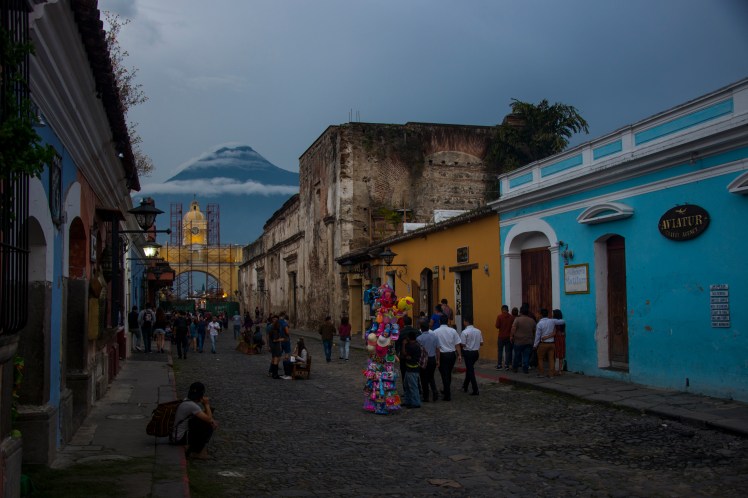
Both countries have a giant lake with great volcano views, but I preferred the stronger presence of Maya culture and cooler air at Lago Atitlan in Guatemala to humid Lago Ometepe in Nicaragua. We saw lava in both countries, but the 15 minute viewing of the Masaya crater in Nicaragua was for me easily outshone by the night spent watching regular eruptions from the Fuego Volcano in Guatemala. Both countries have nice colonial towns, although I preferred the buildings and surroundings of Antigua to those of Granada, Nicaragua. I’m happy to concede that nothing we experienced in Guatemala matched the vibrancy and revolutionary spirit of Leon, but then Guatemala has giant Maya ruins and Nicaragua does not.
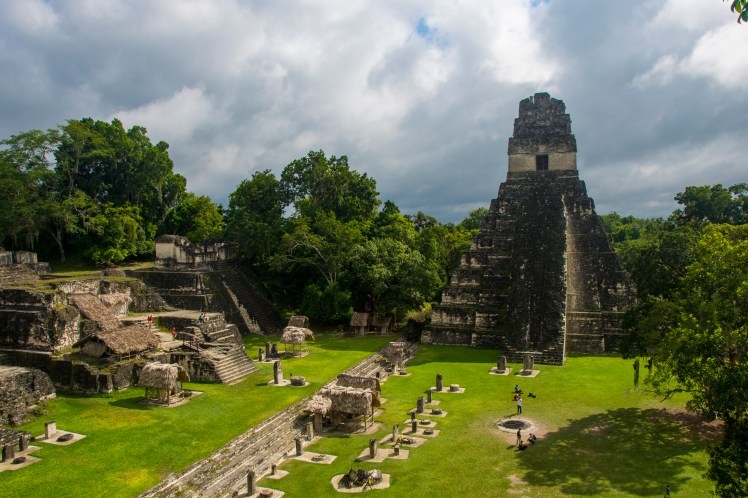

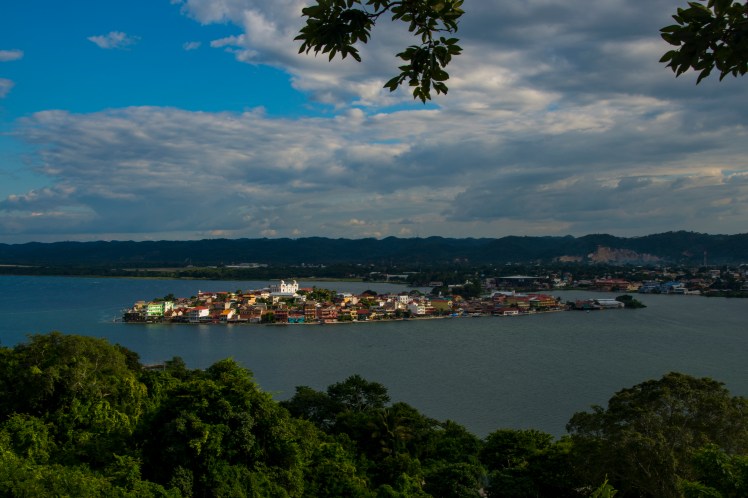
The trip to the old Maya city of Tikal was one of our highlights in Guatemala. The main plaza – with its pyramids at either end – was as spectacular as I expected, but I was completely surprised by how many pyramids have been excavated in the city and also how tall they are. The history, in particular the abandonment of the Mayan cities, is a fascinating and complex story that has been used as an example (often incorrectly) of the dangers of things such as over consumption, land degradation, over population or institutional failure.
When the Maya abandoned their big city states in the south of their empire, many of them moved to the highland areas of Guatemala. This region was also where we spent the rest of our time in Guatemala outside of Tikal. For us, after a couple of months in the sweltering and humid coastal lowland that is found across most of Central America, it was nice to have to wear trackpants and a jumper occasionally.
Aside from lower levels of sweat and itchiness, the highlands have another advantage over the lower altitudes – it was less impacted by European diseases. While in the coastal areas entire populations were nearly wiped out when the Spanish arrived, in the highlands this effect was far less pronounced. This is evident today in Andean Peru and Bolivia, where the indigenous proportion of the population is far higher than the average for the continent. It was also the case in highland Guatemala, where the Maya tradition has continued for centuries.
Unfortunately the Maya face difficulties in preserving their culture. An older Maya lady told us that men had almost entirely abandoned their traditional dress, due to discrimination in the workplace. The women spend months making skilfully designed and colourful clothing, only to then face stiff competition from cheaper (and inferior) machine made garments. The kids don’t want to learn the difficult weaving techniques that take years to master.
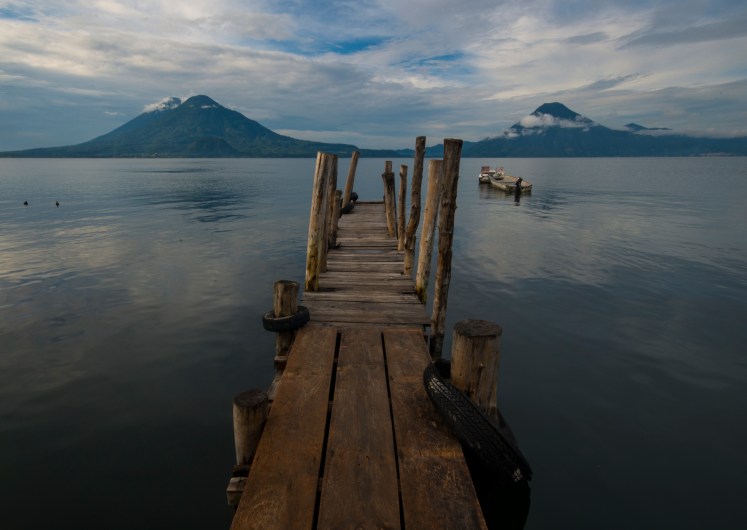

Aside from the indigenous culture, the other big attraction of the highland areas was the scenery. Bordered by three 3000m+ volcanoes, there can’t be many lakes in the world nicer than Lago Atitlan, where we spent four days exploring a number of the different towns dotted along the lakes edge.
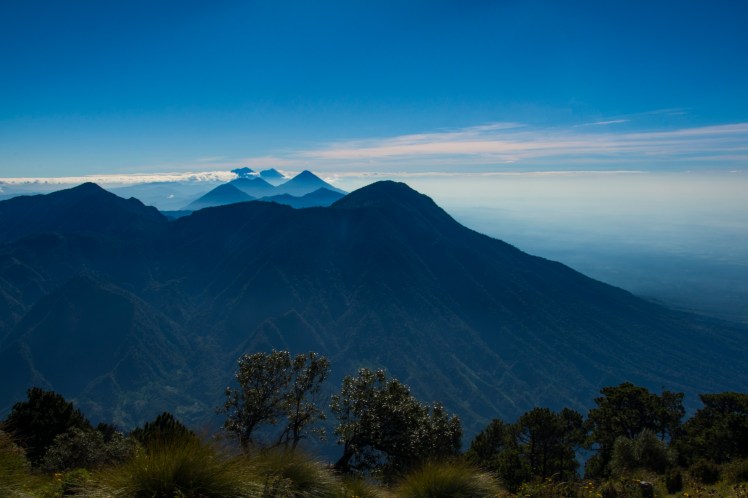
Further north, Quetzaltenango was where Erin summited her first volcano. We were rewarded with views down into an active crater below, and also volcanoes along the ring of fire stretched out in a line either side of us.
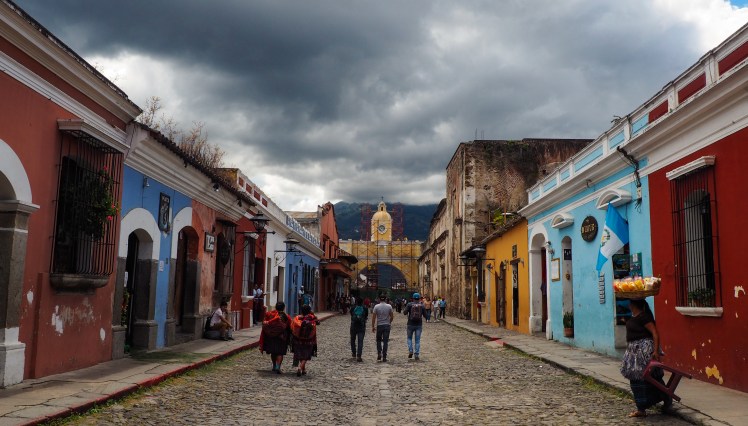

The majority of our time in the highlands was spent in what proved to be my favourite town in Central America, Antigua. A beautifully preserved colonial town right on the foothills of the imposing Agua Volcano, it was small enough to walk everywhere but big enough to have a variety of restaurants and bars. We did a week of Spanish in Antigua, and also visited a nearby Sumpango for its Kite Festival during the Todos Los Santos celebrations (the same weekend and similar to Day of the Dead in Mexico).


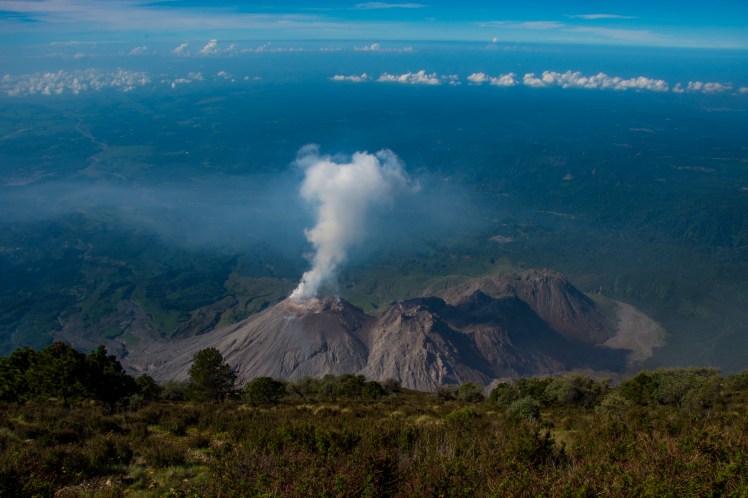
However, the biggest highlight during Antigua was an overnight hike to high up Acatenango Volcano, from where we had the perfect view over the nearby and very active Fuego Volcano. We spent the afternoon and night watching the eruptions appear to change from smoke to lava as it got darker. The freezing temperatures and lack of sleep were quickly forgotten each time lava spurted out the crater in what was definitely one of my favourite nights on the entire trip.


Indeed, Guatemala showed that the onset of some travel fatigue and a developing excitement about returning home has not dampened my enthusiasm for the high points of travel. Instead it’s the mundane aspects where my patience has completely disappeared. Luckily, with less than two months to go and still the Yucatan Peninsula, Cuba and New York to come, there should be more than enough highlights to get me through the last few remaining hostel interactions, bouts of illness and taxi drivers trying to rip us off.
Andrew
 dred
dred 